Authentic Valencian paella: proportions of rice, broth and socarrat
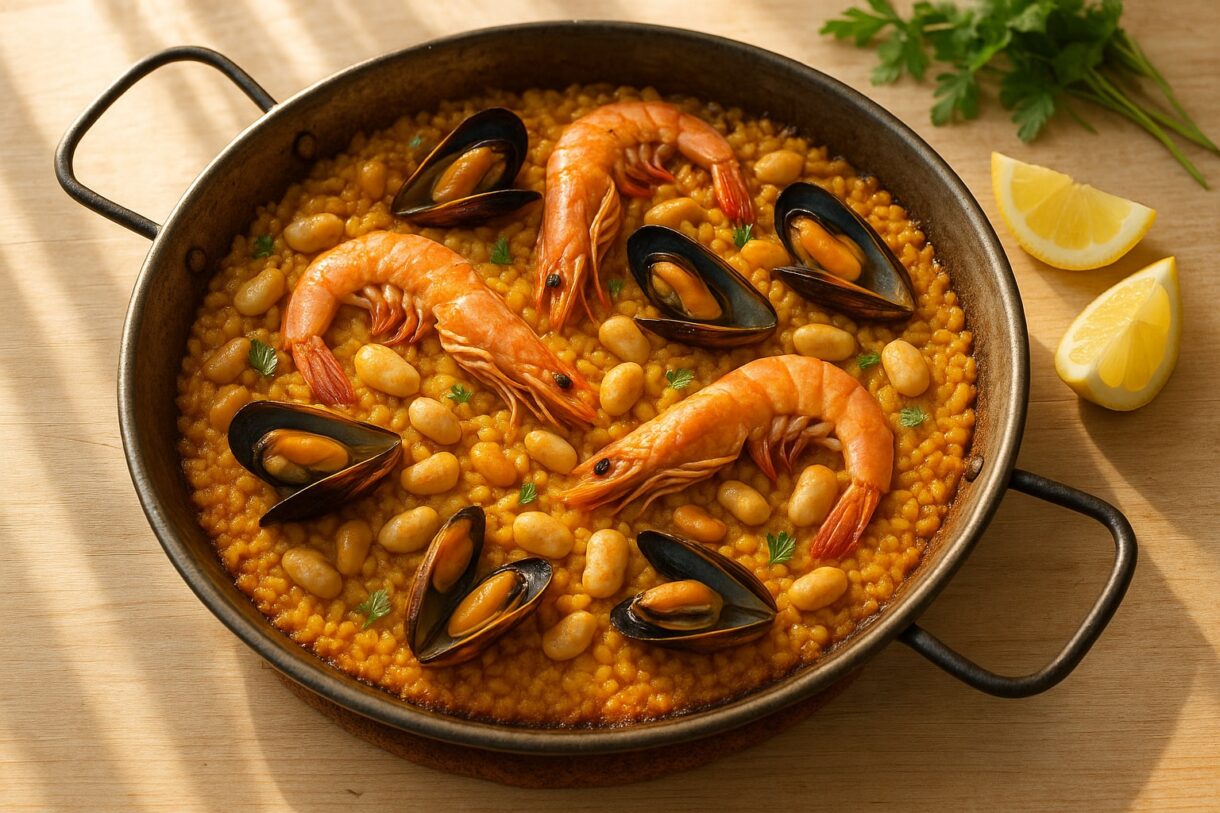
Talking about Valencian paella in Madrid is a minefield. Everyone has an aunt who makes it brilliantly, a friend who adds chorizo (sorry) and a brother-in-law who swears that “the authentic one” has seafood. Let’s make it clear from the start: Valencian paella has chicken, rabbit, two vegetables and rice. Full stop. And there is a fairly firm consensus on this, backed by the producers of the l’Albufera area and the Arroz de Valencia PDO.
This recipe follows the traditional formula defended in towns like Sueca or Catarroja, with the proportions that really work in a 46 cm paella for 6 diners. If you’re looking for the socarrat —that golden crust on the bottom that crackles— we cover that too: it’s not magic, it’s controlled fire at the end.
What Valencian paella is and why “authentic” matters
In 2012, a group of more than 200 Valencian chefs agreed on the ten historic ingredients of the dish. It’s not a purist whim: what gets called “paella” outside Valencia is often a rice dish with things in it, which is fine, but it isn’t the same thing.
Paella was born as field food, from the orchard, cooked over vine shoots and orange-wood fire. Chicken and rabbit because they were in the farmyard. Garrofó and ferraura because they grew alongside. No fish, no chorizo, no peas (that’s another eternal debate).
Quick recipe overview
| Detail | Value |
|---|---|
| Diners | 6 people |
| Paella pan diameter | 46 cm |
| Rice:broth ratio | 1:3 (by volume) |
| Total time | 60-70 minutes |
| Type of rice | Bomba or Senia (Valencia PDO) |
| Difficulty | Medium |
The 10 official ingredients of Valencian paella
For 6 people:
- Valencia PDO bomba rice: 600 g (100 g per person)
- Chicken, cut into pieces: 800 g (thigh and drumstick better than breast)
- Rabbit, cut into pieces: 600 g
- Ferraura (flat green bean): 250 g
- Garrofó (flat Valencian white bean): 150 g, fresh or soaked
- Grated ripe tomato: 200 g (about 2 medium tomatoes)
- Sweet Pimentón de la Vera PDO: 1 teaspoon (5 g)
- Saffron threads: 0.2 g (a generous pinch) or food colouring
- Extra virgin olive oil: 120 ml
- Salt: about 15 g, adjusting at the end
- Water: 1.8 litres (three times the volume of rice)
- Fresh rosemary: one sprig (optional, at the end)
Two traditional additions are allowed depending on the area: vaquetas snails (about 150 g, well purged) or duck replacing part of the chicken. Beyond that, beware of “creative liberties”.
The utensil: the paella (yes, the paella is the pan)
The paella is the pan; the dish takes the same name by metonymy. For 6 people you need one 46 cm in diameter. Why does it matter? Because the rice layer must be thin, just over 1 cm. If you put 600 g of rice in a 30 cm paellera, you’ll get a cooked lump, not a paella.
Material: traditional polished steel. Non-stick is convenient, but it sacrifices the socarrat. Enamelled is a good compromise.
Rice and broth proportions: the 1:3 rule
Here’s the crux. For bomba rice, the ratio is 1 part rice to 3 parts broth by volume. For 600 g of rice (about 600 ml by volume), you need 1.8 litres of liquid.
If you use Senia or Albufera rice, drop to 1:2.5 because they absorb less. Bomba tolerates more broth without overdoing it, which is why it’s the most forgiving for beginners.
Valencian cook’s tip: mark the broth level with the handle of a spoon once it’s boiling. Add the rice and it should sit just below that mark. That gives you a visual reference.
Step-by-step preparation
-
Heat the oil in the paella over medium-high heat for 3-4 minutes. Spread it across the whole surface by moving the pan. Add a pinch of salt to the oil (prevents spitting and sets the sauté).
-
Brown the meats: first the rabbit, 5 minutes, moving it towards the edges. Add the chicken and brown 8-10 minutes more. You’re looking for a deep caramel colour, not pale blond. If they don’t brown well here, the broth will come out flat.
-
Add the ferraura cut into 4 cm sticks and the garrofó. Sauté 5 minutes until the bean loses its bright green and starts to wrinkle.
-
Make a space in the centre, add the grated tomato and fry 4-5 minutes until it loses its water and darkens. When it starts to lightly stick to the bottom, take the pan off the heat and add the Pimentón de la Vera PDO (if you burn it, the whole paella turns bitter), stir for 10 seconds.
-
Add the hot water all at once until it reaches the rivets of the handles (a classic reference). Raise the heat, add the saffron toasted for a few seconds in foil and crushed, and let it boil hard 30-40 minutes. This is the broth’s moment: it concentrates, the meats finish softening, and the kitchen smells like Sunday.
-
Adjust the salt (it should be slightly salty, as the rice will absorb it). Reduce until the liquid reaches exactly the right level (check against the handle mark).
-
Add the rice in a cross pattern, then spread it evenly with the slotted spoon. From here on, DO NOT STIR AGAIN. High heat for 10 minutes.
-
Lower to medium-low heat for another 7-8 minutes. The rice should poke above the broth and start to look dry.
-
Turn the heat to maximum for the last 1-2 minutes to make the socarrat. You’ll hear a dry crackling and smell toasting (NOT burning). As soon as it smells of hazelnut, turn off the heat.
-
Rest: cover with a clean kitchen cloth (not a lid, which traps steam and makes the rice soggy) and wait 5 minutes. Garnish with rosemary and serve at the table.
How to get the socarrat without ruining the paella
The socarrat is the layer of rice that toasts stuck to the bottom. It isn’t burnt rice: it’s caramelised. The difference lies in 30 seconds.
- High heat only once the rice is cooked and there’s no visible liquid.
- Listen: it changes from “bubbling” to “dry crackling”.
- Smell: it smells of sweet toasting, never of acrid smoke.
- Test: insert the tip of a wooden spoon and push. If the rice lifts from the bottom as a crispy sheet, it’s ready.
If your domestic burner doesn’t reach the whole surface, move the paella in circles over the burner for the last few minutes. Rotating it spreads the heat.
Common mistakes (and how to avoid them)
- Stirring the rice after adding it: it destroys the socarrat and releases starch. Forbidden.
- Carton broth: this rice doesn’t accept carton broth. You make the broth yourself by frying the meats in the paella itself. If you want reinforcement, a ham bone in the water and that’s it.
- Heat only in the centre: if you cook on ceramic or induction, use a diffuser or a pan designed for induction. Gas flame remains ideal.
- Too much tomato: more than 200 g and the rice takes on a reddish colour and a dominant fried-tomato flavour. We don’t want that.
- Adding pimentón over high heat: guaranteed bitterness. Always off the heat.
Pairing and serving
It is eaten straight from the paella with a wooden spoon, each person their own triangle. No serving on plates unless there are children or the table is long.
For wine, a young red from Utiel-Requena PDO (bobal) goes wonderfully with the meats from the sofrito. If you prefer white, a verdejo from Rueda with some body. In Valencia people also drink cold beer and water, without fuss.
For dessert, nothing heavy: Valencian orange peeled with a knife or a piece of coca de llanda. Coffee and herbs (Valencian herbal liqueur) if the meal goes on.
If you’re hungry for more rice and fish recipes from the north, take a look at this Basque-style bonito marmitako, which plays in another league but shares the philosophy of honest produce.
Frequently asked questions
Can Valencian paella be made on a ceramic or induction hob?
Yes, but you need a paella with an induction-compatible base or a diffuser for ceramic. The result is correct; the socarrat is a little harder because the heat isn’t as aggressive as with gas or wood fire.
How long does it keep in the fridge?
24-48 hours in an airtight container. Reheat in a pan with a splash of water, covered, never in the microwave if you want to save some texture. The socarrat, sadly, doesn’t survive.
Can it be frozen?
Technically yes, but the rice loses a lot of texture when thawed. I don’t recommend it. Better to calculate the quantities well: 100 g of raw rice per person is the exact measure.
What is the difference between bomba and senia rice?
Bomba absorbs more broth (up to 3 times its volume) and stays looser; it forgives excess liquid better. Senia absorbs less (2.5 times) but takes on more flavour and gives creamier rice. To start, bomba. To master the texture, senia.
Recipes Valencia #arroz #conejo #paella #pollo #receta #Valencia
 Lumara: the essence of Extremadura finds its home in Chamberí
 How to Make an Authentic Valencian Paella Step by Step (for 4 people, at home and in Valencia)
 Zhen and Chinese New Year: A Menu That Turns Madrid into Shanghai
Comentarios cerrados