How to Make an Authentic Valencian Paella Step by Step (for 4 people, at home and in Valencia)
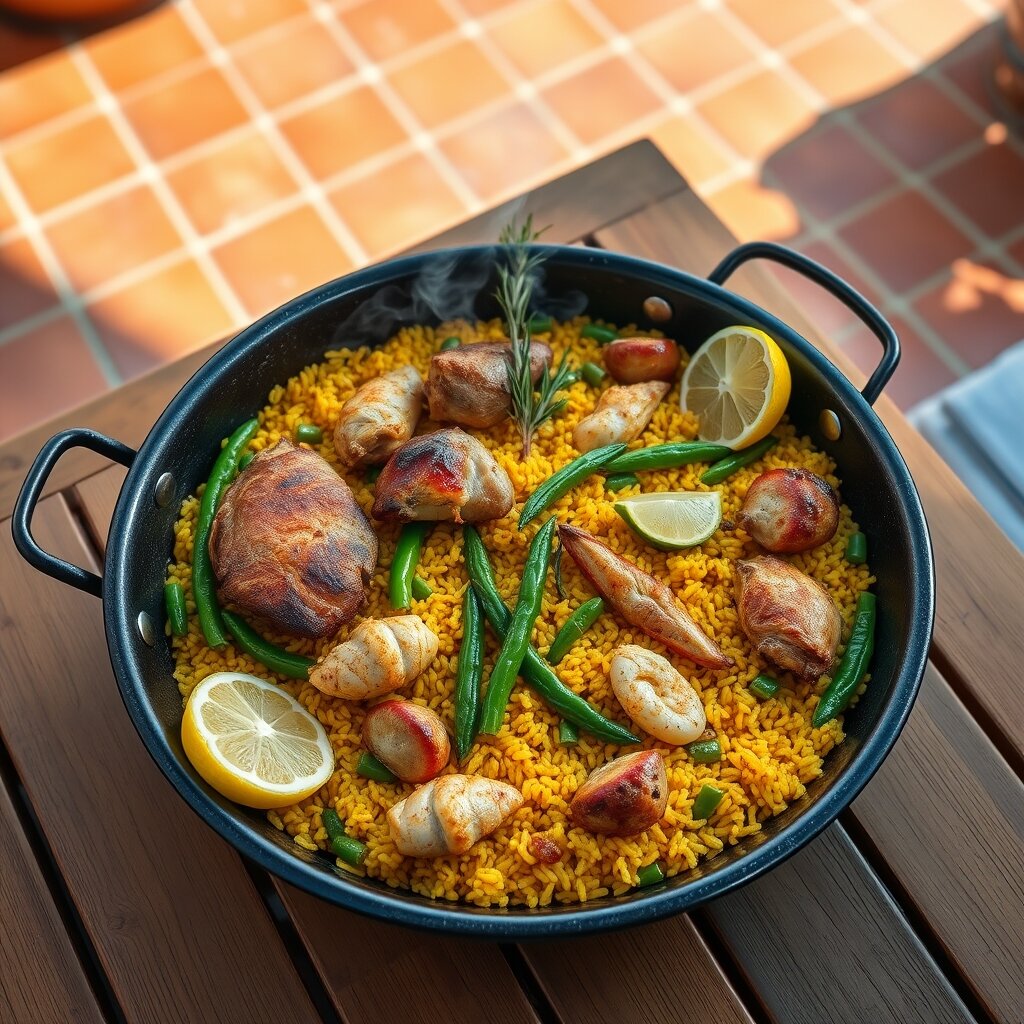
Valencian paella is much more than rice: it is a communal recipe, a weekend ritual and a lesson in balancing ingredients and heat. Choosing the right produce and knowing when to raise or lower the temperature makes the difference between a bland dish and one with character. A good recipe begins long before the fire is lit: the choice of rice, the quality of the stock and the handling of the paellera define the experience.
Description of the dish and context
Valencian paella is the traditional version of Spain’s best-known dish: dry rice cooked in a paella (a wide, shallow pan) with chicken, rabbit and vegetables such as flat green beans and garrofó. It is usually eaten at family lunches or outdoor gatherings, especially in the Valencian Community. Difficulty level: medium. It requires organisation, heat control and a little patience, but the steps are clear and easy to repeat.
Ingredients (for 4 people)
- 400 g of bomba rice
- 1.2–1.3 litres of chicken stock or water with bones (approx. 3 parts liquid to 1 part rice if using bomba)
- 300 g of chicken, cut into pieces (thighs or drumsticks)
- 300 g of rabbit, cut into pieces (optional; replace with more chicken if you cannot find it)
- 150 g of flat green beans, chopped
- 120 g of garrofó (or large white beans)
- 2–3 ripe tomatoes, grated (or 150 g of plain crushed tomato)
- 1 garlic clove (optional)
- 60 ml of extra virgin olive oil
- Saffron threads or food colouring
- Sprig of fresh rosemary (optional)
- Salt and pepper to taste
- Lemon wedges for serving
Step by step
1. Prepare the ingredients and the heat
Pat the meat pieces dry with kitchen paper and season them lightly. Grate the tomato and have the rice measured out. If you are cooking on gas or a paellero burner, adjust the heat distribution: the centre should receive more intensity; on a ceramic or induction hob, use a heat diffuser or a paella pan with good conductivity.
2. Brown the meat
Heat the paella with the oil until it shimmers. Brown the chicken and rabbit over a high flame to seal the skin: 8–10 minutes in total, turning so they colour on all sides. This will add the toasted aromas that later come through in the stock.
3. Sauté the vegetables and tomato
Add the green beans and garrofó and sauté for 3–4 minutes. Stir in the grated tomato and lower the heat. Cook until the tomato loses part of its water and the mixture becomes slightly thick: about 8–10 minutes. Avoid burning the tomato; it should be juicy, not charred.
4. Add the stock and simmer the meat
Cover with the hot stock. Adjust the salt. Let the meat simmer in the stock for 15–20 minutes so it releases its flavour and becomes tender. This is where the base of the dish is built: the aroma should be deep, with notes of roasting and sweet vegetables.
5. Measure the rice and cook
Spread the rice evenly across the paella. Do not stir once it has been added. Set the heat to medium-high: the surface should boil in a controlled way. Approximate time: 18–20 minutes for bomba rice. At the 10-minute mark, check that the rice is absorbing the liquid evenly; if you see dry patches, lower the heat and cover with aluminium foil if necessary.
6. Achieve the socarrat (optional)
For the characteristic socarrat — the golden crust on the bottom — raise the heat for the last 1–2 minutes, paying close attention; there is no need to scrape, just listen for a dry crackling sound and look for small caramelised spots. The socarrat adds a crisp contrast that balances the texture of the tender grain.
7. Rest and serve
Turn off the heat and let it rest for 5 minutes, covered with a clean cloth. Serve straight from the paella; accompany with lemon wedges and, if you like, a sprig of rosemary on the surface for fragrance when serving.
Practical tips and variations
- Stock: the best option is clarified homemade stock; if you use water, add a stock cube or bones to build depth. The stock should not mask the flavours but enhance them.
- Rice: bomba absorbs more liquid and holds its texture better, but you can use senia or rondo rice if you cannot find bomba, adjusting the liquids and timings.
- Mixed or seafood paella: replace the rabbit and part of the chicken with squid, prawns and mussels; reduce the cooking time to keep the seafood from toughening.
- Induction: use a thick-based paella pan and a diffuser. Control the heat with gentle increments.
- Saffron: a few threads infused in the stock add aroma; the colouring is for appearance only.
Common mistakes
- Cooking the rice over too low a heat: it produces pasty grains with no character.
- Stirring the rice after adding it: this disrupts the formation of the crust and releases starch that makes the rice sticky.
- Using cold stock: it lowers the cooking temperature and lengthens the time, affecting the texture.
- Too much oil: it makes the paella greasy and masks the aromas; use just enough to brown.
- Not adjusting the salt at the end: the rice absorbs salt from the stock, so check before serving.
Frequently asked questions
How do I get the socarrat without burning the paella?
Increase the heat only for the last 1–2 minutes and keep watch. You should hear a slight crackle and see small golden spots; if it smells burnt, reduce the heat immediately. A perfect socarrat is golden, not charred.
Can I use long-grain or basmati rice?
It is not recommended. Long-grain or basmati rice has less starch and a different structure; it does not absorb the stock in the same way and does not stay loose like bomba or senia. For a paella with the right texture, use short or medium-grain rice specifically for paella.
What do I do if there is too much liquid at the end?
Raise the heat and cook for 1–3 minutes more so it evaporates, but carefully. If that is not possible, let it rest covered for 5–10 minutes; the absorption sometimes continues off the heat.
Can the paella be prepared in advance?
You can cook the base and set it aside; add the rice and finish cooking just before serving. Avoid reheating a fully cooked paella, as the rice tends to dry out or stick if overheated.
Common mistakes (quick reminder version)
- Rice and stock poorly measured.
- Too much movement: do not stir after adding the rice.
- Inappropriate utensils: a paella pan of the wrong size or with a thin base.
- Insufficient salt or salt masked by strong stock.
- Not controlling the heat during the critical stages.
Valencian paella calls for respect for timings and care at the fire. If you follow the proportions and watch how the stock and the grain evolve, you will get a paella with loose rice, well-defined grains and an aromatic base that invites sharing. Making it in company, on a terrace with a good Levante breeze, or simply in your kitchen, will help you understand the small variations in temperature and texture that turn a correct paella into a memorable one.