Classic yogurt cake: the little-pot recipe in 45 minutes
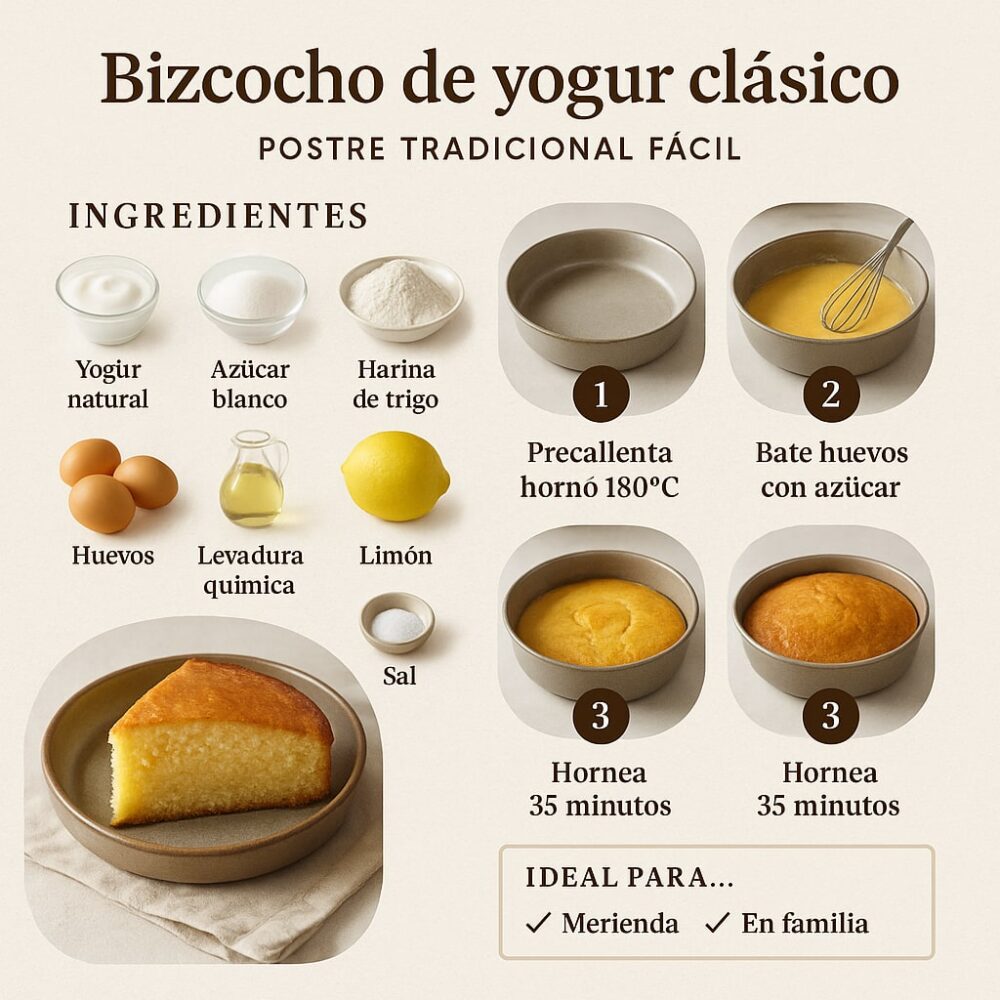
There are recipes that never fail, and this one is the queen. The classic yogurt cake, the little-pot one, is the first recipe many of us made as kids with mum or grandma. One yogurt, the empty pot as a measure, three eggs and not much else. In 45 minutes you have cake for merienda all week long.
The best part isn’t the nostalgia (though that too): it’s that it always works. You don’t need scales, a thermometer or experience. Just stick to the little-pot proportions and don’t open the oven too early. Let’s get to it.
Quick recipe card
| Detail | Value |
|---|---|
| Servings | 8 portions |
| Preparation time | 10 min |
| Baking time | 35 min |
| Temperature | 180 °C (top and bottom heat) |
| Tin | Round 22 cm or rectangular plumcake tin |
| Difficulty | Easy |
Ingredients (22 cm tin, 8 servings)
The trick is using the yogurt pot as a measure. A standard pot is 125 g / 125 ml.
- 1 plain yogurt (125 g), unsweetened
- 2 pots of white sugar (about 250 g)
- 3 pots of plain wheat flour (about 330 g)
- 1 pot of sunflower oil (125 ml)
- 3 eggs size M at room temperature
- 1 sachet of Royal-type baking powder (16 g)
- Zest of 1 lemon (optional, but recommended)
- 1 pinch of salt (half a level teaspoon)
- Butter and flour to grease the tin
Allergens: contains gluten, egg and dairy. I’ll explain below how to adapt it.
Step-by-step method
- Preheat the oven to 180 °C, top and bottom heat, no fan. While it heats up, grease the tin with butter and dust a thin layer of flour. Shake off the excess. (5 min)
- Beat the eggs with the sugar in a large bowl with electric whisks for 3-4 minutes. They should turn pale and double in volume. This step is what puts air into the cake: don’t shorten it.
- Add the yogurt and oil and beat for 30 seconds more, just until combined. Add the lemon zest and salt.
- Mix the flour and baking powder separately and sift over the bowl in three batches. Fold in with a spatula, gently from the bottom up. Don’t beat: you’d lose the air. The batter should be smooth, with the texture of thick cream that falls in ribbons.
- Pour the batter into the tin, level the surface and tap it sharply on the worktop to break large bubbles.
- Bake for 35 minutes at 180 °C on the middle shelf. Don’t open the oven during the first 25 minutes or it will sink. From minute 30 you can test the centre with a skewer: if it comes out clean, it’s ready. If it comes out with batter, give it 3-5 minutes more.
- Take it out and wait 10 minutes before turning it out. Let it cool on a wire rack so the bottom doesn’t go soggy.
What you’re looking for: an even golden top, a yellow, fluffy crumb that springs back when pressed with a finger.
Tricks for a fluffy result
- Eggs at room temperature. If you take them out of the fridge, leave them 10 minutes in a bowl of lukewarm water. They whisk up much better.
- Sift the flour and baking powder together. It takes a minute and the difference in fluffiness is noticeable.
- Don’t open the oven before 25 minutes. The blast of cold air deflates the cake and leaves the centre dense. If your oven browns a lot on top, cover it with foil from minute 25, but don’t take it out.
- If you use a rectangular plumcake tin, increase the time to 40-45 minutes because the batter is taller.
Variations that work
- Lemon: add 2 tablespoons of juice to the batter and, when cooled, a glaze of icing sugar + lemon over the top.
- Chocolate: replace 50 g of flour with 50 g of pure unsweetened cocoa powder (Valor type). Add 2 extra tablespoons of milk because cocoa dries the cake out.
- Apple: arrange two Golden apples in thin slices over the batter before baking and brush with peach jam when it comes out.
- Lactose-free: soy or plain coconut yogurt, same quantity. Almost identical texture.
- Gluten-free: swap the flour for a gluten-free baking blend (such as Schär Mix C) and add half a teaspoon of xanthan gum if the blend doesn’t include it.
Pairings and serving
It’s a breakfast and merienda cake. With a long black coffee or a cortado it’s wonderful; also with a glass of cold milk, the old-fashioned way. If you want it as a dessert after a meal, serve it with a scoop of vanilla ice cream and a splash of Pedro Ximénez DO Montilla-Moriles: a flawless contrast of sweetness and acidity.
For weekend breakfasts, toasting a slice for 30 seconds in a pan with a knob of butter makes an express version of torrija. If you like traditional sweets, here you also have homemade-style milk torrijas for Holy Week and Andalusian honey pestiños for Christmas.
Frequently asked questions
How long does the yogurt cake keep? Three or four days at room temperature, wrapped in cling film or in an airtight container. From day four it starts to dry out. To extend it, a slice of apple in the container keeps it moist.
Can it be frozen? Yes, and it keeps perfectly for up to 2 months. Cut it into portions, wrap each in cling film and put them in a freezer bag. To defrost, 30 seconds in the microwave or an hour at room temperature.
Can I use olive oil instead of sunflower oil? You can, but use a mild extra virgin olive oil (arbequina, for example) and reduce the quantity to 100 ml. If you use a strong one like picual, its bitterness overpowers the cake.
Why is my cake raw inside and burnt outside? The oven is too hot. Lower it to 170 °C and extend the time to 40-45 minutes. Every oven behaves differently: your first cakes will help you calibrate yours.
Tasty Things Recipes #bizcocho #postres #receta #reposteria #yogur


 Lumara: the essence of Extremadura finds its home in Chamberí
 How to Make an Authentic Valencian Paella Step by Step (for 4 people, at home and in Valencia)
 Zhen and Chinese New Year: A Menu That Turns Madrid into Shanghai
Comentarios cerrados