Water kefir: how to grow it at home and how it differs from milk kefir
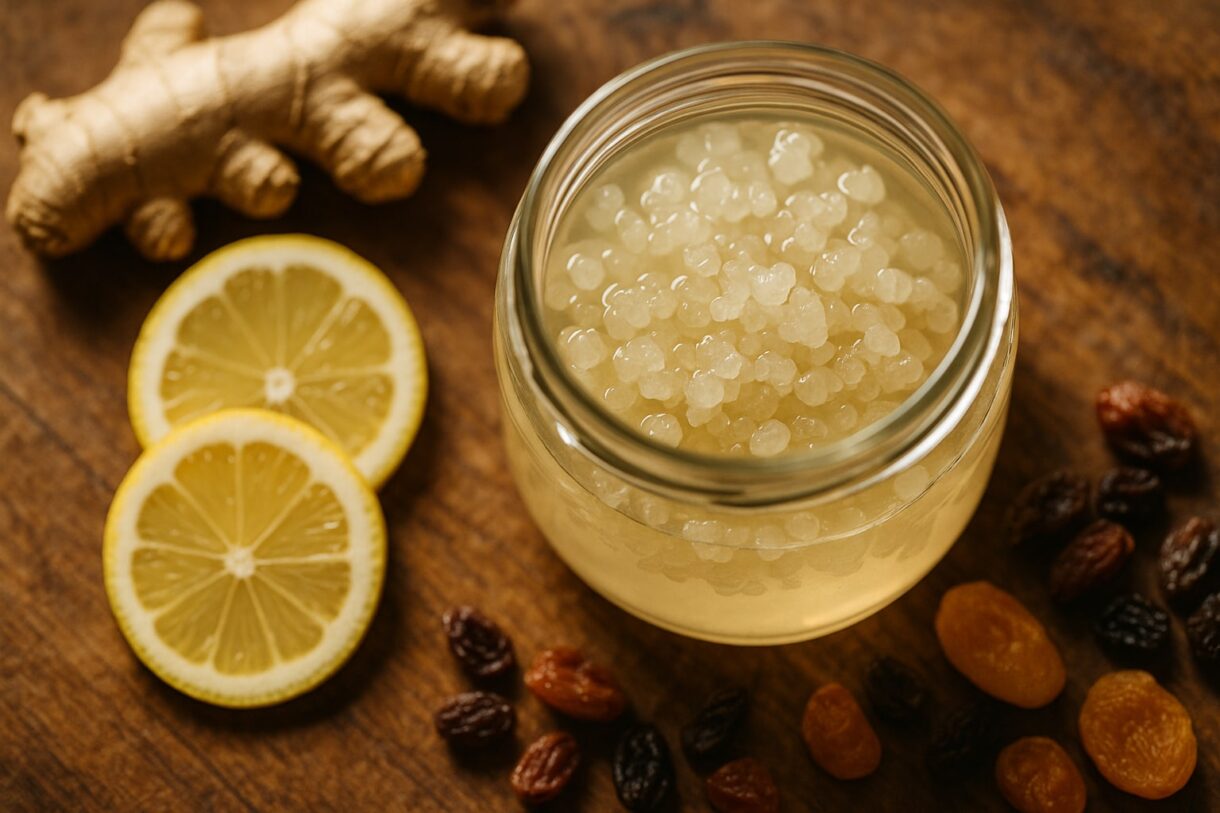
Water kefir has been quietly making its way into the pantries of people who neither drink milk nor want to. And it has its charm: it is a live fermented drink, with natural fizz, lactose-free, and packed with beneficial bacteria and yeasts. It is made at home with sugar, water and some grains that look like little gelatinous crystals. That’s all.
Here I’ll explain how to set it up from scratch, how long it takes, how to tell it apart from milk kefir (which has its own quirks too) and what care it needs so it doesn’t give up at the first slip-up.
What water kefir is and where it comes from
Water kefir is a fermented drink made from a symbiotic colony of bacteria and yeasts — the famous grains or “tibicos” — that feed on sugared water. The result is a slightly acidic drink, with natural carbonation and very little alcohol (under 1% in short fermentations).
Its exact origin is lost among the different versions: some place it in Mexico, where it was known as tibicos and grew on nopal cactus pads, while others trace it to the Caucasus, the birthplace of milk kefir. What is clear is that it is a traditional ferment, not a modern invention of the health-food shop.
Water kefir grains: what they are exactly
Water kefir grains are small translucent structures, somewhere between gelatinous and crunchy, whitish or slightly amber in colour. They measure between 2 and 8 mm and are formed of polysaccharides (mainly dextran) that the bacteria themselves produce as a scaffold. Inside, living symbiotically, are lactobacilli, acetic acid bacteria and yeasts such as Saccharomyces and Kluyveromyces.
You won’t find them in the supermarket. They are obtained as gifts (the kefir community is generous), through exchange groups or from specialist fermentation shops. Approximate price: between 5 and 12 € for 50 g, enough to get started.
Differences between water kefir and milk kefir
Both are fermented with grains, but that’s where the similarity ends. The base, the microbiota, the flavour and who they suit all change.
| Feature | Water kefir | Milk kefir |
|---|---|---|
| Base | Water + sugar | Whole milk |
| Lactose | None | Traces (most is fermented) |
| Vegan-friendly | Yes | No |
| Flavour | Mild, citrusy acidity, fizzy | Lactic acid, creamy |
| Texture | Liquid, like a soft drink | Thick drinkable yoghurt |
| Fermentation time | 24-48 h | 24 h |
| Dominant strains | Lactobacilli + yeasts + acetic acid bacteria | Lactobacilli + lactic yeasts |
If you come from yoghurt, milk kefir will feel familiar. Water kefir is closer to a craft lemonade with a slight tartness — somewhere between kombucha and fermented lemonade.
Benefits and probiotic properties of water kefir
It is rich in live probiotic strains: various studies have identified between 10 and 20 different species of bacteria and yeasts per sample, with counts around 10⁶–10⁸ CFU/ml. That makes it an interesting source of microorganisms for the gut microbiota.
It also provides small amounts of B-group vitamins (produced by the yeasts) and organic acids such as lactic and acetic acid. It is low in calories — the sugar is consumed during fermentation — and contains no lactose, so it suits vegan diets and people with lactose intolerance.
A sensible note: it is a food, not a medicine. It helps diversify the microbiota, but it does not “cure” anything on its own. If you are on immunosuppressive treatment or pregnant, check with your doctor first, since this is a product containing live microorganisms.
If you’re interested in home fermentation, I also recommend having a look at how to prepare fermented ginger step by step, which plays in the same league.
Ingredients for the base recipe (1 litre)
- 1 litre of mineral or filtered water (chlorine-free)
- 60 g of wholecane sugar (panela or muscovado)
- 40 g of water kefir grains rehydrated
- 1 slice of unwaxed lemon (optional)
- 2 dried figs or 3 raisins without sulphites (optional, they provide minerals)
Important: chlorinated tap water kills the colony. Either filter it, leave it to rest for 24 hours in an open jug so the chlorine evaporates, or use mineral water.
Step-by-step preparation
-
Dissolve the sugar in 200 ml of lukewarm (not hot) water. Stir until clear. Add the rest of the cold water. Time: 2 minutes. Check: clean water, no crystals at the bottom.
-
Pour the mixture into a glass jar with a wide mouth (at least 1.2 litres). No metal in direct contact with the grains: use a wooden or plastic spoon.
-
Add the grains, the lemon and the figs if using them. Cover with a gauze or fine cloth secured with a rubber band. It needs to breathe, not be sealed airtight.
-
Let it ferment at room temperature (20-25 °C) for 24 to 48 hours, away from direct light. Check: the liquid clears, smells slightly sour and you’ll see little bubbles rising.
-
Strain through a plastic sieve, remove the lemon and figs, keep the grains and set aside the liquid. That liquid is now your kefir, ready to drink.
-
Second fermentation (optional): bottle the liquid in a bottle with an airtight cap, add fruit (half a peach, ginger, blueberries) and leave for 12-24 h more at room temperature. You get more fizz and flavour. Be careful when opening: it builds up a lot of pressure.
Caring for water kefir
The grains multiply on their own. Each week you’ll have more than you started with. Give them away, freeze them (they keep 2-3 months in the freezer in a little sugared water) or dehydrate them for reserve.
If you’re going to be away, keep them in the fridge in fresh sugared water. They survive 2-3 weeks on pause without problems. When you return, do a couple of “reactivation” fermentations and they’ll be like new.
Common mistakes: using chlorinated water (they die), sealing the jar airtight (it bursts or the colony suffocates), using sweeteners (they have nothing to feed on) or metal (it damages them).
Frequently asked questions
How long does fermented water kefir keep?
In the fridge, sealed, for 7 to 10 days. It keeps fermenting slowly, so each day that passes it becomes a little more sour and less sweet.
Can I use white sugar?
Yes, but over time the grains weaken. Wholecane sugar provides minerals the colony needs. Alternate if you like, but don’t use only refined sugar.
Is it suitable for coeliacs and people with lactose intolerance?
Yes to both. It contains no gluten or lactose. Check that any figs or raisins you use have no traces if you are very sensitive.
How much can I drink per day?
Start with 100-150 ml a day during the first week. If it agrees with you, you can increase to 250-500 ml. Starting strong all at once usually causes temporary digestive discomfort.
Healthy Eating Tasty Things #agua #bebida saludable #fermentados #kéfir #receta


 Lumara: the essence of Extremadura finds its home in Chamberí
 How to Make an Authentic Valencian Paella Step by Step (for 4 people, at home and in Valencia)
 Zhen and Chinese New Year: A Menu That Turns Madrid into Shanghai
Comentarios cerrados