Traditional Manchego pisto: the slow recipe with poached egg
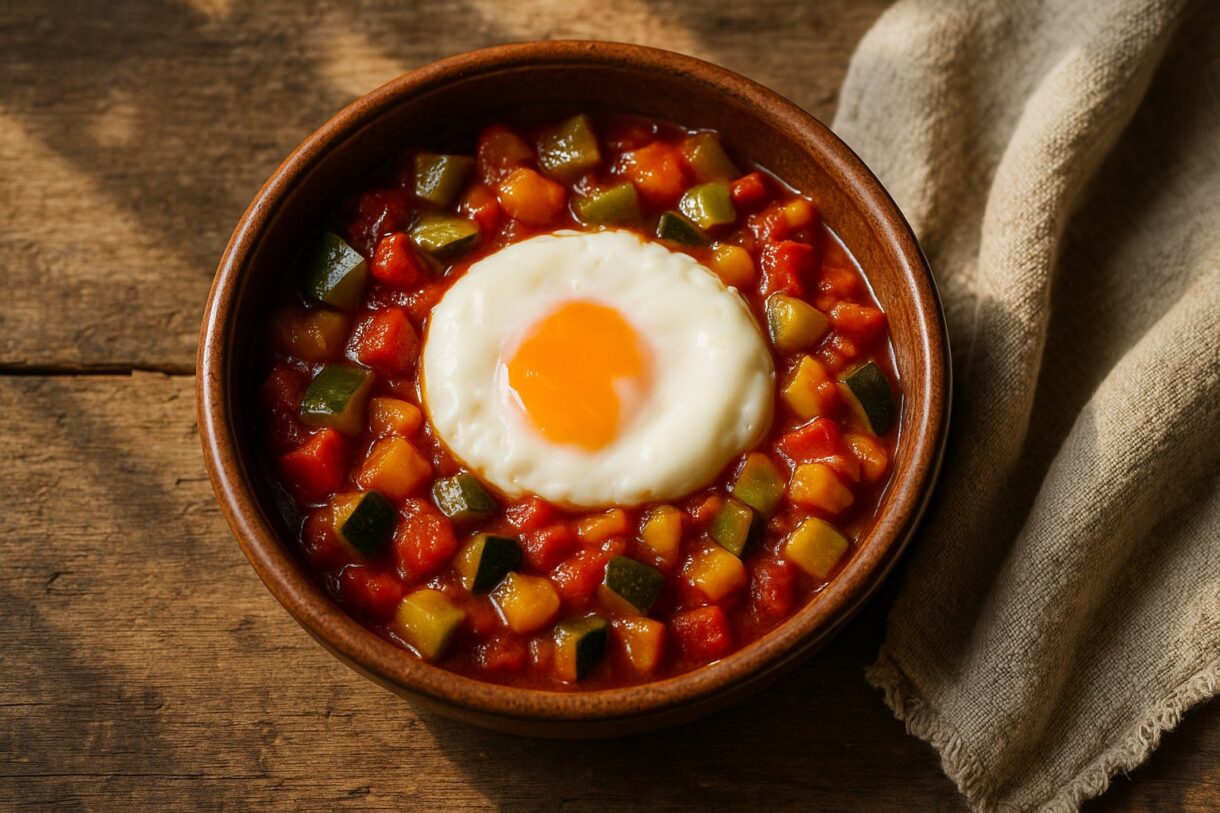
Manchego pisto is neither French ratatouille nor the potato-laden pisto they make in Valencia. It is a slow stew of garden vegetables, patient sautéing and reduced tomato, as much of La Mancha as aged cheese or Valdepeñas wine. It is eaten lukewarm, with bread, and often topped with an egg — fried or poached, depending on the household.
Here is the recipe as my aunt made it in Tomelloso: unhurried, no weird tricks, and with a poached egg on top that gives it a festive touch. If you have 45 minutes and decent vegetables, this will turn out well.
What it is (and what it is not) Manchego pisto
Manchego pisto is tomato, Italian green pepper, zucchini and onion, sautéed separately or together over low heat until the whole thing becomes creamy and free of loose water. Full stop. No eggplant (that belongs more to ratatouille), no potato (that would be “pisto with potatoes”, something else), and no red pepper dominating the mix.
The difference from ratatouille is twofold: here there are no Provençal herbs and no garlic taking the lead, and the vegetables are cooked until they partly fall apart, not al dente in layers. And compared with the Valencian pisto, the Manchego version dispenses with potato and uses more tomato.
Ingredients (4 people)
- 4 ripe pear-shaped tomatoes (about 600 g)
- 2 Italian green peppers (250 g)
- 1 medium zucchini (300 g)
- 1 large sweet onion (200 g)
- 1 clove of garlic (optional, some people leave it out)
- 80 ml of Extra Virgin Olive Oil (preferably PDO Campo de Montiel or similar)
- 1 teaspoon of salt (5 g) plus salt at the end to adjust
- 1 teaspoon of sugar (5 g), for the tomato
- Freshly ground black pepper
- 4 fresh free-range eggs (M or L)
- 1 tablespoon of white wine vinegar (for poaching)
Contains egg. Naturally gluten-free and dairy-free.
Step-by-step preparation
-
Prepare the vegetables (10 min). Peel the onion and cut it into 1 cm dice. The green pepper, without seeds or white ribs, also into 1 cm dice. The zucchini, with skin on, into cubes of the same size. The tomato: blanch it for 30 seconds in boiling water, transfer to cold water, peel and chop. Set aside separately.
-
Sweat the onion (10 min). In a wide, shallow pan, heat the oil over medium-low heat. Add the onion with a pinch of salt. Let it sweat, not brown: aim for translucent and glossy. If you like, add the chopped garlic at the end, for 30 seconds.
-
Add the pepper (10 min). Raise the heat to medium, add the green pepper and stir. Cook until it loses its firmness but keeps some bite. It should be dark green, not brown.
-
Add the zucchini (8 min). Add the zucchini and stir. It will release water: that is normal. Let it evaporate. Target: whole cubes, but soft when pierced.
-
And now the tomato (20-25 min). Add the chopped tomato, the teaspoon of sugar (to correct the acidity), salt and pepper. Lower the heat. This is where true Manchego pisto begins: slow cooking, lid partly on, stirring every 4-5 minutes. It is ready when the oil separates at the edges and no loose water remains at the bottom. Adjust the salt.
-
Poach the eggs (3 min per egg). In a saucepan, bring a litre of water to the boil with the tablespoon of vinegar (never salt: it toughens the white). Reduce to very low heat so it does not bubble. Crack each egg into a small bowl. Stir the water into a whirlpool with a spoon and slide the egg in. Cook for exactly 3 minutes: set white, runny yolk. Lift out with a slotted spoon onto kitchen paper.
-
Plate. A bed of hot pisto on the plate, poached egg on top, flaked salt and a turn of pepper. A thread of raw oil over the top.
Tips and variations
- Vegetables cooked separately: purists fry each vegetable in batches and combine them with the tomato at the end. It is more defined but takes twice as long. Worth it for a Sunday.
- Canned tomato: if there is no decent seasonal tomato, use 400 g of whole peeled canned tomatoes. Never jarred fried tomato: it ruins it.
- Red pepper: you can add half a red pepper along with the green one. It adds sweetness. Not orthodox, but it works.
- Classic fried egg: if poaching intimidates you, a fried egg with crispy edges in very hot oil does the job equally well. It is the most popular version in La Mancha.
- Thermomix: I do not recommend it for pisto. The vegetables turn to purée and you lose texture. This dish calls for a frying pan.
Pairing and serving
A young red wine from the area: a Cencibel from DO La Mancha or a short-aged Valdepeñas suits it perfectly. If you prefer white, a fresh Airén can stand up to the tomato.
It is served as a one-pot dish with country loaf bread, or as an accompaniment to grilled meats. Cold the next day, with a slice of oil-rubbed toast, it is even better: the sofrito has time to settle. In that case, it works as a quick supper in the style of tuna and tomato empanadillas for a lifelong afternoon snack — thrifty cooking done well.
FAQ
Can Manchego pisto be frozen? Yes, without the egg. It keeps for 3 months in a sealed jar or container. Thaw in the fridge for 12 hours and reheat over low heat. The zucchini loses some texture, but the flavour improves.
How long does it keep in the fridge? In a closed container, 4 days. In fact, from the second to the third day it is at its best.
Does authentic Manchego pisto include egg? The pisto itself does not. The egg (fried or poached) is added on top when serving and is a tradition in almost all of La Mancha. Without egg it is still Manchego pisto.
Can I make it in advance? That is the ideal approach. Make it the day before, store in the fridge and reheat over low heat for 10 minutes before serving. The egg, always at the last moment.
Ciudad Real Tasty Things Recipes #calabacin #huevo #pisto manchego #receta #tomate #verduras


 Lumara: the essence of Extremadura finds its home in Chamberí
 How to Make an Authentic Valencian Paella Step by Step (for 4 people, at home and in Valencia)
 Zhen and Chinese New Year: A Menu That Turns Madrid into Shanghai
Comentarios cerrados