Auga e Sal (Santiago): eat monkfish and scallops 100 meters from the Obradoiro
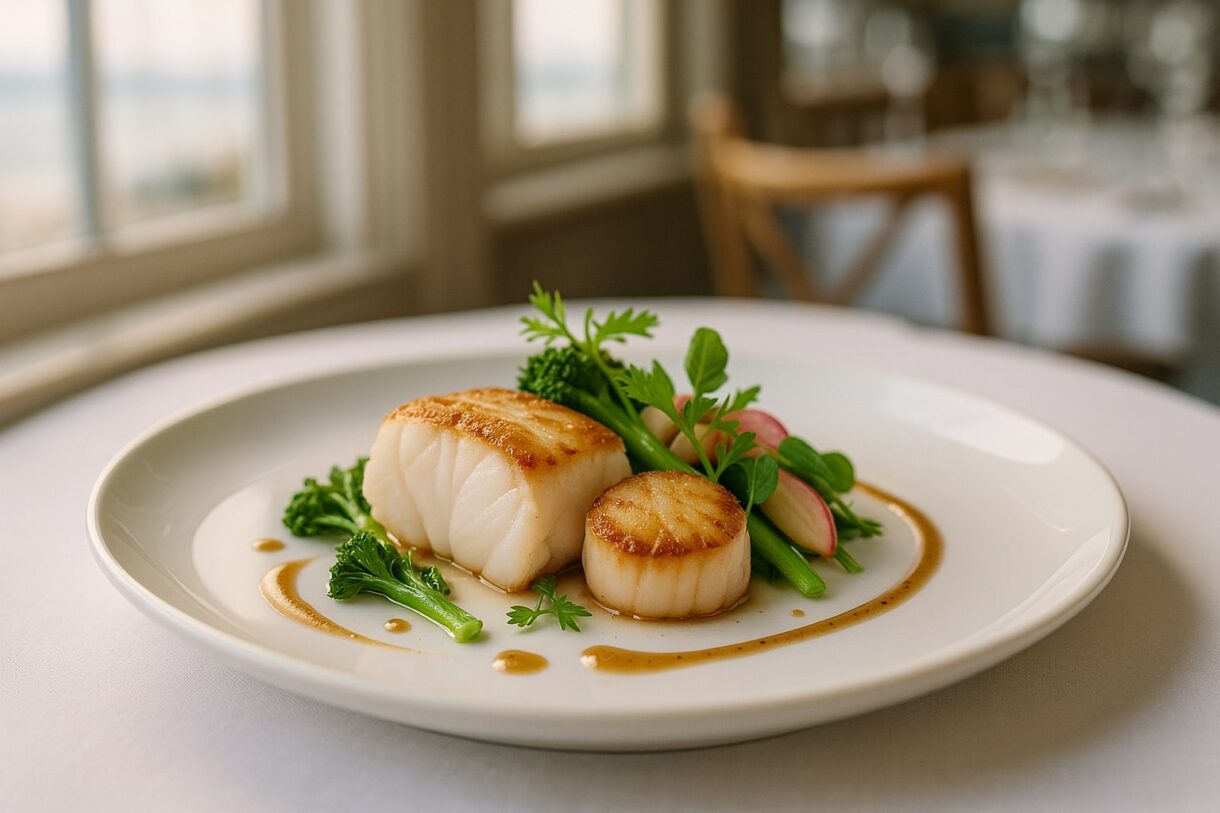
We visited Auga e Sal, a short walk from the Obradoiro
We went on a Thursday in October, three friends, with a proper appetite and a desire to eat Galician food without falling into the octopus-for-tourists trap. Santiago has that thing: you leave the Cathedral and within five minutes you’re in a place with paper tablecloths where they charge you €28 for a frozen scallop. Auga e Sal was the opposite bet: a reservation made two weeks in advance, Galician cuisine built on quality produce, and the Praza do Obradoiro literally around the corner.
It’s not a hidden gem, mind you. It’s in the guidebooks, the hotel recommends it, and on some days it fills up. But it holds up, which is the hard part. And for anyone looking for where to eat monkfish in Santiago de Compostela without taking a risk, it’s one of the most solid options in the historic center.
The place: stone, overhead light and quiet
Auga e Sal is on Rúa do Preguntoiro, right in the historic center, about 100-150 meters from the Praza do Obradoiro at a relaxed walking pace. Barely five minutes from the Cathedral façade. Exact location for anyone using GPS: old town, pedestrian zone, no car problems because you can’t get near it even if you try.
The venue is a surprise. From the outside, a sober stone façade with no aggressive signage. Inside, a dining room with high ceilings, exposed stone walls, tables that are genuinely spaced apart (not the cramped squeeze of a modern bistro where you end up hearing about the neighbors’ divorce), and overhead light that comes in through a courtyard and changes with the time of day. You can eat calmly. The background noise is conversation, not pop music at full blast.
Small-to-medium capacity, around 30-35 seats. Accessibility: there’s a small step at the entrance, so let them know if you’re coming in a wheelchair. Restrooms are decent.
The menu: monkfish, scallops and whatever comes off the boats
The menu is short and honest, which is how I like it. Traditional Galician cooking with some contemporary twists, but without foam-of-whatever flourishes. It changes with the season and with whatever arrives from the Ribeira fish market or the Abastos market (which, by the way, is ten minutes’ walk away).
Starters
We started with scallop empanada, made in-house, with thin dough that is properly cooked underneath (that detail which separates a good empanada from one that feels soggy). The filling was juicy, with genuinely slow-cooked onion and recognizable scallops, not minced beyond recognition. Around €6-7 per individual portion.
We also ordered seared scallops with their coral, two pieces per serving, strongly browned on the outside and barely cooked through on the inside. That’s the point. If they’re cooked all the way through, they turn rubbery. Not here. Served on a base of confit leek with a touch of olive oil. Price, around €18-22 per serving of two pieces, depending on the season. When they’re in closed season, obviously they won’t have fresh ones: ask beforehand.
Main course
The main dish of the day was Galician-style monkfish: monkfish tail boiled with its potato, La Vera smoked paprika and a fried sauce of garlic, onion and oil. It sounds basic, and it is. That’s why it’s so hard to pull off well. The monkfish was cooked to just the right point, juicy, without that cottony taste it gets when overcooked. The Galician potato, cooked in the same broth as the fish, soaked up flavor without falling apart. The sauce was generous but didn’t drown the dish. Around €26-30 per plate.
One at the table ordered seafood rice with lobster, for two people minimum. I didn’t try all of it, but the mouthful I was passed had the right rice texture (creamy, slightly al dente in the center) and a broth that tasted of real sea. This rice doesn’t tolerate carton stock, and here, clearly, it doesn’t use it. Around €32-36 per person.
Dessert
Baked cheesecake with chestnut honey. Creamy inside, lightly set on the outside, without the excess sugar that ruins 80% of restaurant cheesecakes. The Galician chestnut honey gives it a floral bitterness that balances everything. €6-7.
We skipped the filloa for lack of stomach space, but the next table ordered it and it looked serious: thin, with homemade pastry cream.
Service: professional without being stiff
Service is unhurried but never leaves you waiting. A young woman who knew the menu by heart (where the fish came from, the cut, the alternatives if something wasn’t available) looked after us. When we asked about wine, she didn’t launch into the sales pitch of “this one is really interesting”. She asked what we were going to eat and what we usually drink, and offered two options in different price ranges. For me, that alone is worth the tip.
The wine list: Rías Baixas leads, as it should
A reasonable list, with a focus on DO Rías Baixas (logical, since we are where we are), a presence of DO Ribeiro and DO Ribeira Sacra, and a red from elsewhere for anyone who doesn’t want white with fish. We went for an albariño from Rías Baixas from a small producer (around €28 a bottle) that held up from start to finish: pronounced acidity, saline character, and enough body not to get lost next to the monkfish.
If you’re interested in comparing it with other wine temples we’ve visited, take a look at Ambivium restaurant in Peñafiel, with 3,500 wine references — they play in another league, but the philosophy of pairing produce with the wine of the land is the same.
Price and value for money
We wrapped up with shared starters, a main each, one dessert between three, a bottle of albariño, water and coffee. Total, around €55-65 per person with wine included. Without wine, it can come down to €40-45.
Is it cheap? No. Is it expensive for what you get in Santiago’s historic center? Not really. It sits in the mid-to-upper range of the center and competes well with what it offers at that price. There are cheaper places, obviously, but there’s also plenty of tourist trap with precooked scallops and reheated octopus at €22 a tapa.
Booking Auga e Sal: how and when
Booking is highly recommended, especially Thursday to Saturday evenings and weekend lunches. In high season (Holy Week, summer, the Xacobeo Year, long weekends) book at least a week ahead. You can do it by phone or through their website. Usual hours: lunch 1:30-3:30 pm, dinner 8:30-11 pm. Closed Sunday evenings and Mondays (confirm beforehand, as they may change).
If you go without a reservation on a Tuesday or Wednesday at 2 pm, you may get a table. On a Saturday at 9 pm, don’t bother.
Verdict: 2 hams 🐖🐖
Auga e Sal earns 2 out of 3 hams. Recommended, and I’d go back with plans: it’s one of the places I’d take someone visiting Santiago for the first time who wants properly made Galician food without leaving the old town. Honest produce, cooking that respects the ingredient, service that knows what it’s talking about and reasonable value for money within the context. It isn’t a gastronomic destination in itself (I wouldn’t travel to Santiago just to eat here), but if you’re already there, it’s a safe bet.
It lacks the element of risk or surprise that would earn it the third ham. Everything is good, nothing throws you off. And sometimes that’s exactly what you need after three hours looking at the Pórtico da Gloria.
Who it’s for: pilgrims with a budget, couples on a short trip, families who want to eat Galician food properly without tourist theatrics. Who it’s not for: backpackers on a tight budget (there are better-value taverns), or diners looking for avant-garde cooking (this is well-executed tradition, not fireworks).
FAQ
How far is Auga e Sal from Santiago Cathedral? Auga e Sal is on Rúa do Preguntoiro, about 100-150 meters from the Praza do Obradoiro, right in the pedestrian historic center. You can walk there in under five minutes from the Cathedral’s main façade. It’s one of the Galician food options closest to the Obradoiro.
How much does it cost to eat at Auga e Sal? The average spend is around €55-65 per person with wine included, and about €40-45 without drinks. Main fish dishes (monkfish, scallops, lobster rice) range from €26 to €36. It sits in the mid-to-upper range of Santiago’s historic center, without being the most expensive.
Do you need a reservation at Auga e Sal? Yes, very recommended from Thursday to Saturday and in high season (Holy Week, summer, long weekends, Xacobeo Year). One week ahead is enough on normal dates. On Tuesday and Wednesday lunchtimes you can try without a reservation, but we can’t guarantee it.
Which dishes are worth ordering? The essentials are the Galician-style monkfish, the seared scallops with their coral and the scallop empanada. If you’re two or more, the seafood rice with lobster is a safe bet. For dessert, the baked cheesecake with Galician chestnut honey is a good way to close the meal.
Coruña We were in... #cocina gallega #Galicia #marisco #rape #restaurante #vieira

Comentarios cerrados