Braised Oxtail in Red Wine: The Traditional Recipe from Córdoba
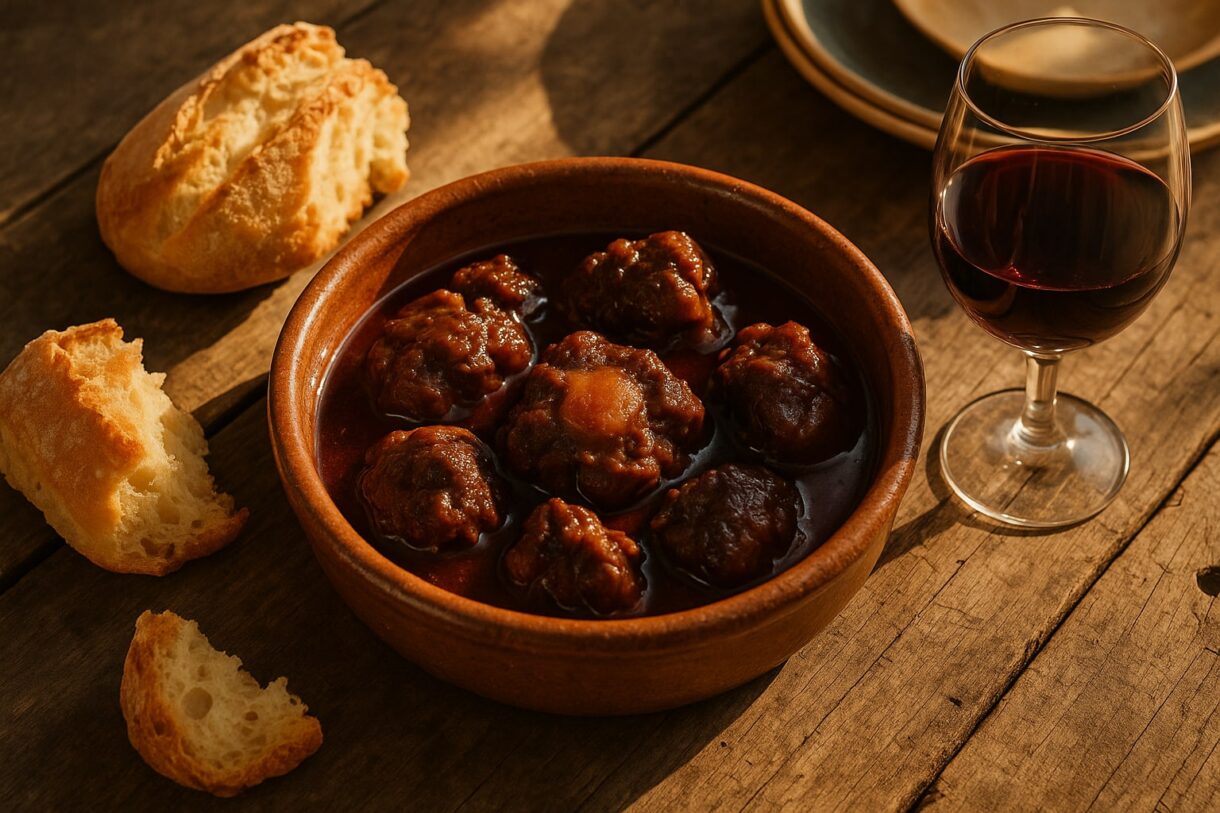
Few stews smell like Sunday the way this one does. The braised oxtail in red wine is one of those dishes Córdoba has turned into a flagship, and when done well it has no rival: the meat melts, the sauce shines like a mirror, and the bread disappears before the meat does. The stew is said to have been born in the taverns near the bullring, using the tails of the bulls that had been fought. Today the bullfighting origin hardly matters: it’s made with ordinary beef tail and it’s still the same slow luxury.
It’s a weekend dish, a pot on the stove while you get on with other things, and—very important—it improves from one day to the next. If you have guests on Saturday, cook it on Friday.
Origin and tradition of Córdoban oxtail
In Córdoba you’ll find it in historic taverns such as Casa Pepe de la Judería or El Caballo Rojo, always with the same structure: tail, vegetables, red wine (preferably from the region, Montilla-Moriles DOP red or a full-bodied tempranillo) and hours over low heat. The Andalusian version differs from others in two things: a generous amount of wine and that dense final reduction, almost caramelized, that clings to the spoon.
Ingredients (serves 4)
- 1.5 kg of beef tail cut through the joints (ask your butcher to cut it)
- 2 large onions (about 400 g)
- 1 leek (white part, 100 g)
- 2 carrots (200 g)
- 1 head of garlic + 4 loose cloves
- 1 Italian green pepper (100 g)
- 2 ripe tomatoes, grated (250 g)
- 750 ml of full-bodied red wine (a crianza from Ribera or a red from Montilla-Moriles DOP)
- 500 ml of beef stock (homemade is best; if from a carton, low in salt)
- 60 ml of Jerez brandy
- 80 ml of extra virgin olive oil (a Priego de Córdoba DOP is perfect)
- 40 g of flour
- 2 bay leaves
- 1 teaspoon of whole black peppercorns
- 4 cloves
- 1 sprig of thyme
- Salt (start with 1 level teaspoon and adjust at the end)
Step-by-step preparation
- Prepare the tail (10 min). Dry it well with kitchen paper, season with salt and pepper and dust lightly with flour. If it’s wet it won’t brown, it will steam.
- Brown the meat (15 min). In a wide, heavy-bottomed casserole, heat the EVOO over high heat. Sear the pieces of tail on all sides until well browned, almost toasted. Set aside. This step provides 50% of the flavour.
- Soften the vegetables (20 min). Lower the heat to medium. In the same oil, add the onion, leek, carrot, pepper and finely chopped garlic. Cook until the onion is translucent and golden at the edges.
- Add the tomato and spices (8 min). Add the grated tomato, bay leaves, peppercorns, cloves and thyme. Cook until the tomato loses its water and the oil starts to separate.
- Flambé with brandy (2 min). Turn up the heat, add the brandy and let the alcohol evaporate.
- Wine and reduction (15 min). Return the tail to the casserole, add the red wine and turn up the heat. Let it reduce by half, uncovered. The smell of alcohol must disappear.
- Stock and long cooking (3 h). Cover with stock until the meat is almost submerged. When it starts to boil, reduce to the lowest heat, cover and cook for 3 hours. Stir every 45 minutes so it doesn’t stick.
- Final touch (20 min). Carefully remove the pieces of tail (they’ll fall off the bone). Strain the sauce, pressing the vegetables with a ladle. Return it to the casserole, add the tail and reduce for another 15–20 minutes until the sauce coats the spoon. The meat should come away at the touch of a fork.
Tricks and variations
- The day before is better. Cook it, cool it, store it in the fridge. The next day, remove the solidified layer of fat from the top (it’s cleaner) and reheat over gentle heat. The flavour is multiplied.
- If the sauce is thin, remove the meat and reduce over high heat for 5–10 more minutes. Never add flour at the end; it tastes raw.
- Pressure cooker: 45 minutes from when the valve starts to rock, instead of 3 hours. You lose some nuance but it saves time.
- Gluten-free: replace the flour with the same amount of cornflour or simply omit it and reduce more at the end.
Pairing and serving
Serve it piping hot, with the sauce spooned over and plenty of bread on the side. The classic Córdoban accompaniment is fried potatoes cut into small cubes or a simple mashed potato. It also goes well with white rice.
To drink, a full-bodied red: a crianza from Ribera del Duero, a Rioja reserva or the same red from Montilla-Moriles DOP you used in the cooking. No light wines; the stew will devour them.
If you enjoy spoon stews with history, this one plays in the same league as chicken in pepitoria with almonds and saffron: the same spirit of slow cooking and a sauce you want to mop up.
Frequently asked questions
Can it be frozen? Yes, and it keeps perfectly for up to 3 months. Freeze it with the sauce in an airtight container. Defrost in the fridge for 24 hours and reheat over gentle heat.
How long does it last in the fridge? Up to 4 days in an airtight container. In fact, from the second to the fourth day it is at its best.
Can I make it with pork tail? You can, but it isn’t the same. Pork tail is fattier and less gelatinous. Reduce the time to 1.5 hours and adjust the spices.
What if I can’t find a whole tail? Ask the butcher for “oxtail osso buco” or “bone-in chuck”. It isn’t identical but it comes close in texture after long cooking.
Córdoba Tasty Things Recipes #carne #gastronomia #rabo-de-toro #receta #vino


 Lumara: the essence of Extremadura finds its home in Chamberí
 How to Make an Authentic Valencian Paella Step by Step (for 4 people, at home and in Valencia)
 Zhen and Chinese New Year: A Menu That Turns Madrid into Shanghai
Comentarios cerrados