Homemade-style milk torrijas: the Holy Week recipe
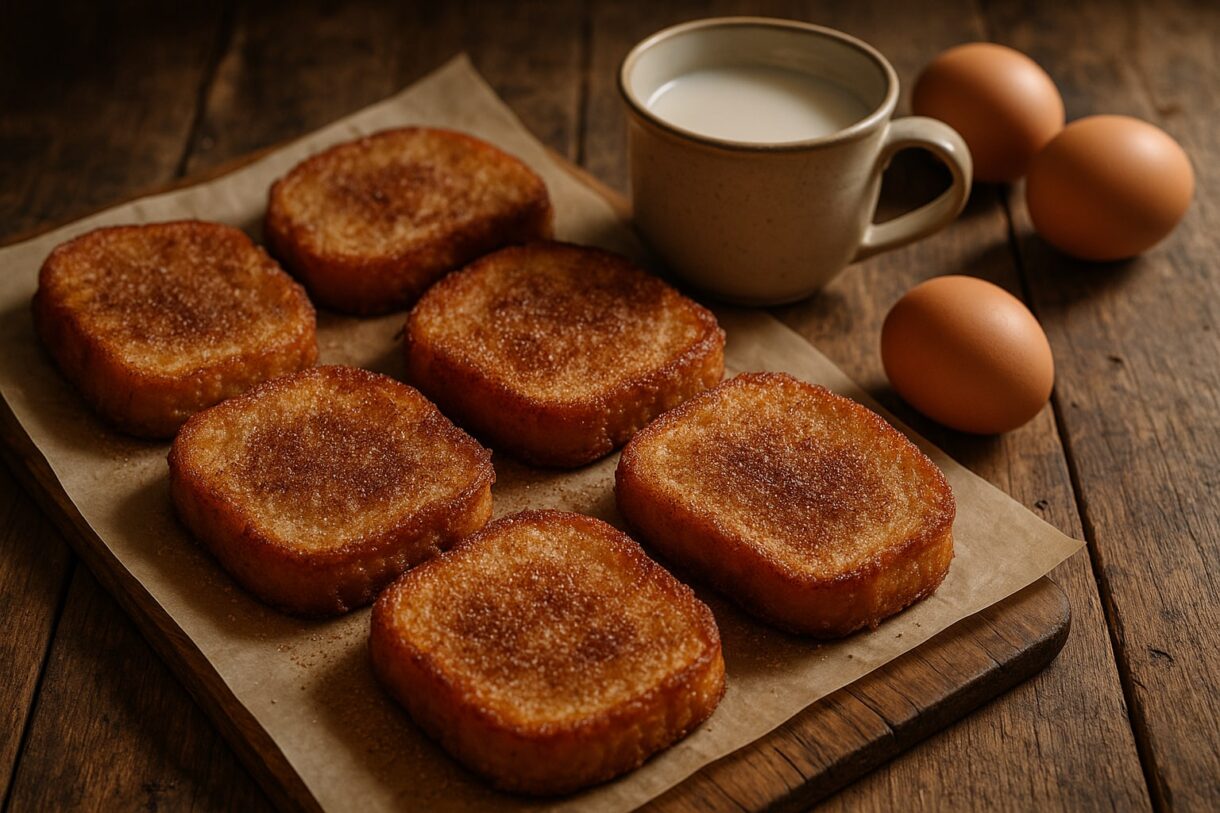
Torrijas are one of those desserts that smell like grandma’s house and Holy Week at the neighborhood bakery. Day-old bread, milk, sugar, cinnamon and a pan with well-heated oil. Nothing more. And yet, half the torrijas you try out there are dry, unevenly soaked or swimming in burnt oil.
Here is the recipe I’ve been making at home for years. It serves 4 people (two torrijas each, because one is never enough) and requires no more skill than keeping an eye on the heat.
Ingredients for 4 people (8 torrijas)
- 1 liter of whole milk (skimmed milk doesn’t provide enough fat and the result is blander)
- 8 slices of torrijas bread about 2.5-3 cm thick (about 400 g)
- 100 g of sugar for the milk + 80 g of sugar for coating
- 1 cinnamon stick
- The peel of 1 lemon (only the yellow part, no white pith)
- 2 large eggs for the batter
- 1 tablespoon of ground cinnamon to mix with the sugar for coating
- 500 ml of mild olive oil (0.4º) or sunflower oil for frying
The bread matters more than you think. Look for what is called torrijas bread or brioche bread at the bakery, with a tight crumb. Regular baguette-style bread will fall apart in the milk.
Step-by-step preparation
- Infuse the milk. Put the liter of milk in a saucepan with the 100 g of sugar, the cinnamon stick and the lemon peel. Heat over medium heat until it starts to steam, without boiling (about 5-6 minutes). Turn off the heat and let it infuse, covered, for 15 minutes. Strain.
- Place the bread. Arrange the slices in a deep dish, in a single layer if you can. Pour the warm milk over them until covered. Let them soak 10 minutes per side. The bread should be juicy but intact, not a mush.
- Beat the eggs in a deep plate. A fork and some patience, no need to whip them.
- Heat the oil in a wide frying pan to 170-175 ºC. If you don’t have a thermometer: drop in a breadcrumb, and it should brown in 15 seconds without burning. If it smokes, it’s too hot.
- Coat and fry. Lift each slice carefully (preferably with a slotted spoon and helping yourself with your hand), dip it in egg, coating all sides well, and slide it into the oil. Fry 90 seconds per side, until the coating is golden and slightly crispy. Don’t put more than two at a time or the oil temperature will drop.
- Drain on absorbent paper for a few seconds.
- Coat in sugar and cinnamon. Mix the 80 g of sugar with the tablespoon of ground cinnamon on a plate and roll each torrija while it is still warm so the coating sticks well.
They are eaten lukewarm or cold, never straight out of the oil (you’ll burn yourself and won’t taste anything).
Tricks and common mistakes
- The bread doesn’t soak evenly on both sides. If you leave it 20 minutes face up and then turn it over, the bottom one ends up waterlogged. Ten and ten, I insist.
- If the oil is too low, the torrija absorbs grease and becomes heavy. If it’s too high, it browns on the outside while the egg coating stays raw. 170 ºC is the sweet spot.
- Wine version (wine torrijas): replace 300 ml of milk with 300 ml of young red wine and add an extra tablespoon of sugar. Typical of Castilla y León.
- Lactose-free: use unsweetened oat drink and add 20 g more sugar. They are less creamy but work well.
- Gluten-free: with a specific gluten-free bread, but be careful, it breaks more easily. Slices at least 3 cm thick.
Pairing and serving
A young, well-chilled Pedro Ximénez is the obvious pairing: its sweetness complements the sugar and cinnamon without being cloying. If you prefer something less sweet, a Málaga moscatel works. For breakfast or an afternoon snack, a long black coffee.
Serve two torrijas per plate, with a little of the leftover sugar sprinkled on top. If you want to give the classic a twist, a vanilla ice cream on the side works well (hot-cold contrast), though you lose the traditional feel. If you enjoy traditional Castilian cooking, you also have the homemade custard with biscuit, which shares the spirit of a spoon-and-pan dessert.
Frequently asked questions
How long do they keep in the fridge? Up to 3 days in an airtight container. From the second day they lose their crispness but gain in juiciness. Don’t store them while warm.
Can they be frozen? I don’t recommend freezing them. The milk crystallizes and when thawed the bread turns grainy. It’s better to make just the right amount.
Can I make them the day before if I have guests? Yes, make them in the morning and store them covered in the fridge. Take them out 30 minutes before serving so they reach room temperature. Don’t reheat them in the microwave, as the coating softens.
Why did they break when I fried them? Either the bread was too soft, or you left it in the milk for too long, or you moved it without a slotted spoon. The three most common mistakes.
Tasty Things Recipes #leche #pan #postre #receta #semana santa #torrija


 Lumara: the essence of Extremadura finds its home in Chamberí
 How to Make an Authentic Valencian Paella Step by Step (for 4 people, at home and in Valencia)
 Zhen and Chinese New Year: A Menu That Turns Madrid into Shanghai
Comentarios cerrados