Marmitako de bonito: the traditional Basque recipe
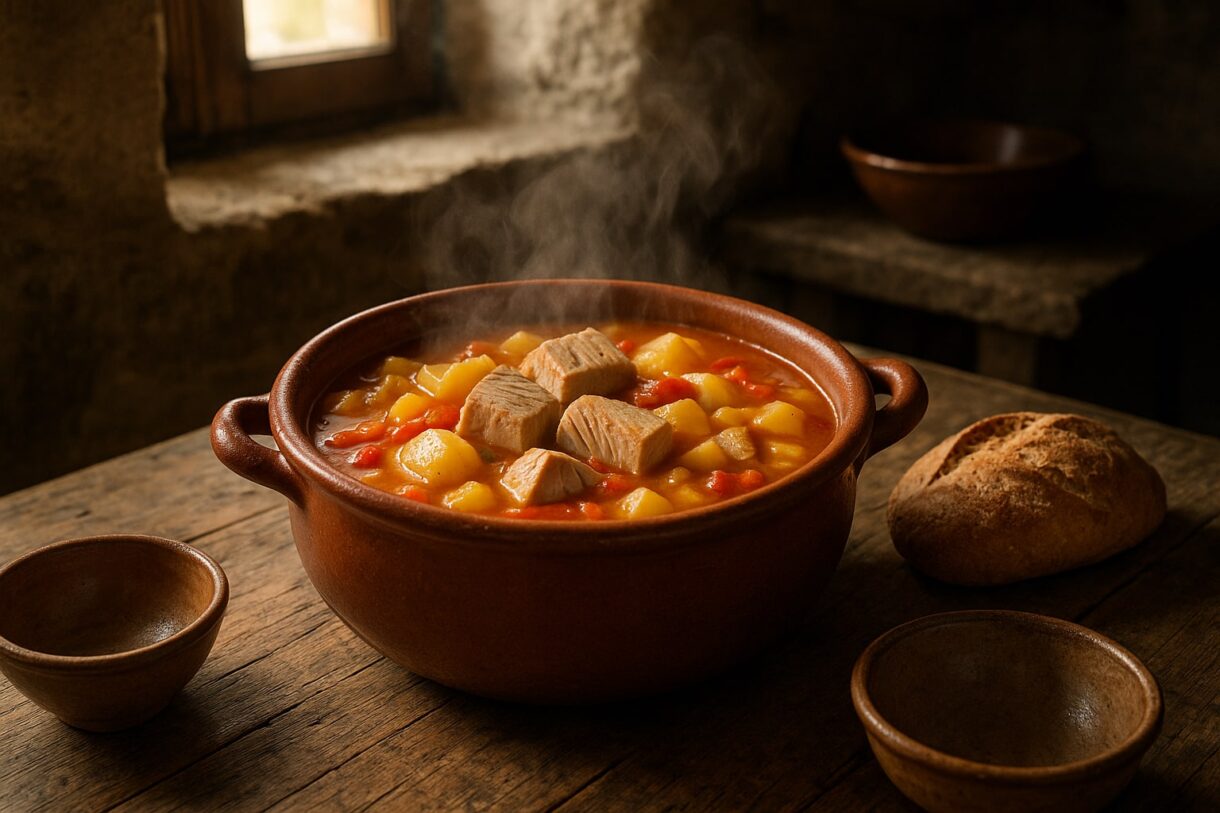
The marmitako de bonito is one of those stews that smell of the harbour. It was born on the bonito boats of the Cantabrian Sea, in the galley kitchens on board, when Basque fishermen cooked with what they had: potato, onion, pepper and the northern bonito they had just hauled onto the deck. That is where the name comes from — marmita, the pot — and also its direct, unfussy character.
It is a summer dish, although that may seem contradictory. The bonito season starts at the end of June and runs until September, so July and August are the months when the fish is at its best and the stew makes the most sense. In winter, with frozen bonito, it turns out well, but it is not quite the same.
Where marmitako comes from
The fishermen of the Basque Country and Cantabria cooked it in the common pot on board. Before the potato arrived from America, it was made with stale bread. The recipe we now consider traditional marmitako — with broken potato, choricero pepper and bonito in chunks — took shape in the 19th century. In Bermeo a cooking contest has been held for decades, and some families have been defending their version for generations.
It is not a luxury stew. It is thrifty cooking built around an outstanding product: northern bonito (Thunnus alalunga) caught with rod and line, one fish at a time.
Ingredients (serves 4)
- 600 g of northern bonito, cleaned, skinless and boneless, cut into 3 cm chunks
- 800 g of potatoes (agria or kennebec, which break down well)
- 2 medium onions (300 g)
- 1 Italian green pepper (100 g)
- 1 red pepper (150 g)
- 3 cloves of garlic
- 2 dried choricero peppers (flesh only)
- 1 ripe tomato, grated (150 g)
- 100 ml of txakoli or dry white wine
- 1.2 l of bonito fumet or light fish stock
- 60 ml of extra virgin olive oil
- Salt
- Freshly ground black pepper
Allergens: fish. Gluten-free, dairy-free.
Step-by-step preparation
-
Rehydrate the choricero peppers. Put them in a bowl of hot water for 30 minutes. When soft, scrape the flesh out with a spoon and set aside. Discard the skin.
-
Prepare the fumet (if you don’t have it ready). With the bonito bones and trimmings, a carrot, half a leek and an onion: 25 minutes over low heat, strain and set aside. No stock cubes.
-
Sweat the vegetables. In a wide, shallow casserole, heat the 60 ml of oil. Add the onion, both peppers and the garlic, all finely chopped. A pinch of salt. 20 minutes over medium-low heat, stirring. You are looking for a golden colour and an almost jam-like texture.
-
Add the tomato and the choricero. Stir in the grated tomato and the choricero flesh. 8 more minutes, until the tomato releases its water and the sofrito separates from the oil.
-
Break the potato. This step is key. Don’t cut: break. Push the knife into the potato and tear it outwards. The starch escapes through the irregular cracks and thickens the broth naturally. Bite-sized chunks, about 3 cm.
-
Sauté the potato. Add it to the sofrito and stir for two minutes so it absorbs the flavour.
-
Deglaze and simmer. Pour in the txakoli, turn up the heat for 1 minute to burn off the alcohol. Cover with the hot fumet (about 1.2 l; the potato should be just covered). Salt. 20–25 minutes over medium heat until the potato is tender but still intact.
-
Take off the heat and add the bonito. This is the step almost everyone skips. Turn off the heat. Season the bonito chunks and submerge them in the stew. Cover. 5–6 minutes of resting with residual heat is enough. The bonito stays juicy, pink inside. If you cook it further, it dries out and turns to sawdust.
-
Rest for 10 minutes before serving. The stew settles and improves.
Tips and variations
- Agria potatoes are the classic choice in the north; kennebec works just as well. Avoid monalisa: it doesn’t break down, so it won’t thicken.
- If you can’t find choricero, a spoonful of choricero pepper paste (tub) works. Ñora won’t do: it changes the flavour profile.
- Off-season version with tinned bonito: 400 g of ventresca in oil, added at the end without cooking. It’s not the same, but it saves a winter day.
- A splash of cider vinegar when serving lifts the stew if it tastes flat.
Pairing and serving
Serve it in a deep bowl, very hot. The spoon should stand upright in it. To drink, young txakoli from Getaria, an albariño with some ageing on lees, or a natural cider. No powerful reds: they overwhelm the bonito.
It doesn’t need a side dish. Bread. A country loaf with a thick crust for mopping up, and that’s it. If you want to stretch the meal, some fried green peppers make a good starter.
If you enjoy traditional spoon cooking, take a look at pisto manchego with poached egg too: another slow stew where the vegetables take centre stage.
Frequently asked questions
Can marmitako be frozen? The stew without the bonito, yes: it keeps for 2 months. Already-cooked bonito doesn’t freeze well; it turns stringy. Freeze the base and add fresh fish when you thaw and reheat.
How long does it keep in the fridge? 2 days in an airtight container. When reheating, do it over very gentle heat without letting it boil, so the bonito doesn’t overcook.
Can I use bluefin tuna instead of northern bonito? You can, but it changes the dish. Bluefin is fattier and more intense; the result is heartier and less delicate. If you want to explore the product further, we also cover the ronqueo of bluefin tuna from the almadraba in Barbate.
Why is my marmitako watery? Two common reasons: you cut the potato instead of breaking it (so it didn’t release starch) or you added too much broth. The potato should be just covered, not swimming.
Cantabria Tasty Things Recipes #bonito #Cantabria #marmitako #patata #pescado #receta


 Lumara: the essence of Extremadura finds its home in Chamberí
 How to Make an Authentic Valencian Paella Step by Step (for 4 people, at home and in Valencia)
 Zhen and Chinese New Year: A Menu That Turns Madrid into Shanghai
Comentarios cerrados