Miso: the Japanese fermented paste that boosts Spanish broths and stews
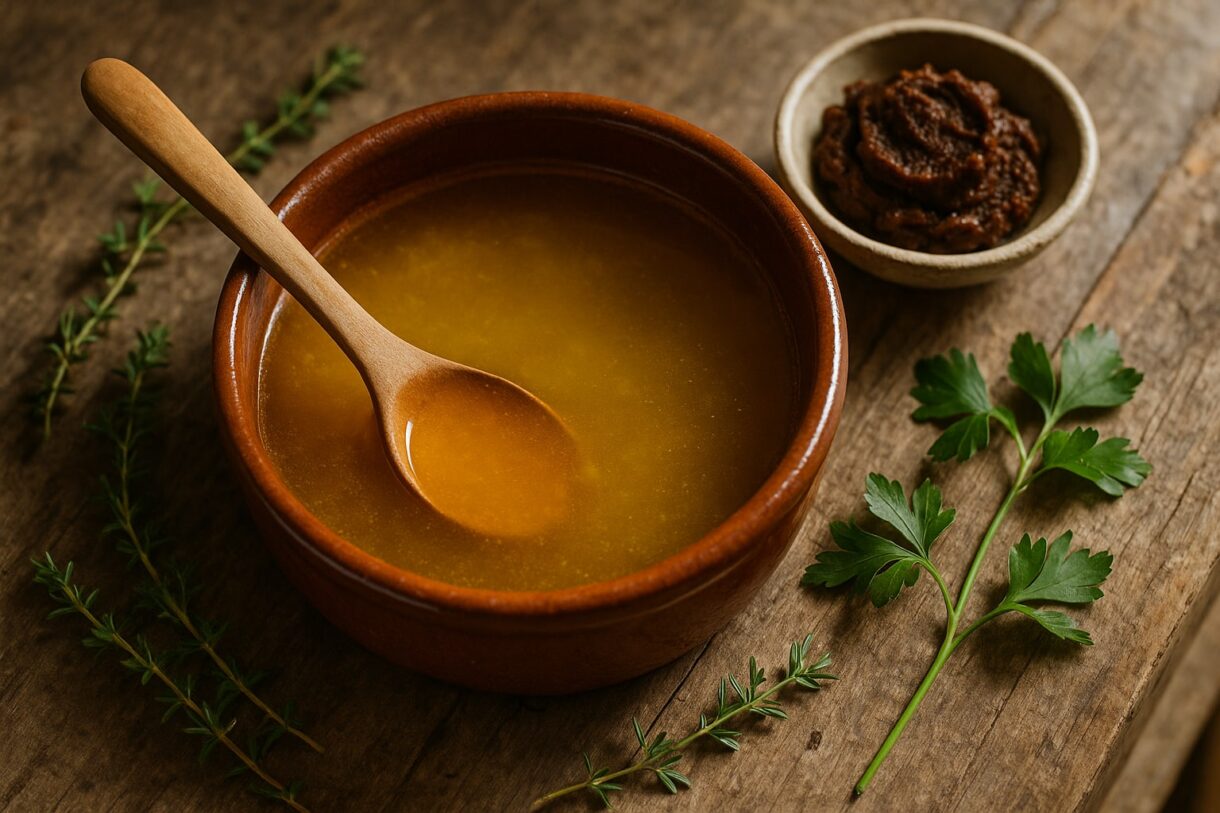
For a couple of years now I’ve been stirring spoonfuls of miso into things my grandmother would never have imagined. A Madrid-style cocido with a touch of white miso at the end. A hake pil-pil finished with red miso. And no, it doesn’t taste like ramen. It tastes like what it already tasted like, but with more depth, more roundness, more that.
Here’s what you need to know to use it well in your everyday cooking, without pretension or pricey jars gathering dust in the fridge.
What miso is and why you should care
Miso is a fermented paste made from cooked soybeans, salt and koji (rice or barley inoculated with the mold Aspergillus oryzae). It ferments anywhere from a few weeks to several years. The result: a dense, salty paste with a tremendous umami punch.
And here’s the appeal for us: miso’s umami works with our stews the way a good ham broth does. It’s natural glutamate. It reinforces meats, boosts vegetable broths, rounds out sofritos. It’s not a trend, it’s the chemistry of savoriness.
Types of miso: white, red, awase, and which one to buy first
There are dozens, but to avoid going crazy, stick to three:
- Shiro miso (white): short fermentation (2–8 weeks), more rice than soy, salt around 5–6%. Mild, slightly sweet, almost buttery. This is the starter one, the forgiving one.
- Aka miso (red): long fermentation (6–24 months), more soy, salt at 11–13%. Intense, with toasty notes, almost like licorice. Use little and use it well.
- Awase: a blend of the two. The everyday all-rounder.
If you’re only going to buy one, start with shiro miso. It forgives mistakes and fits almost anything.
White miso vs red miso: when to use each
Think of white as delicate and red as bold. White goes into vegetable creams, vinaigrettes, short fish marinades, compound butters. Red is for long-cooked stews, dark sauces, red meat adobos, oven glazes.
Quick rule: the darker the miso, the longer the process it will accompany.
Umami: the fifth taste and why miso concentrates it
Kikunae Ikeda described umami in 1908 by isolating glutamate from kombu seaweed. Miso, thanks to its long fermentation, is a natural glutamate bomb along with other compounds like inosinate. Translation: you don’t need a bouillon cube if you have miso in the fridge.
A useful fact: 10 g of red miso delivers a flavor impact equivalent to what you’d get from 5 g of salt plus a concentrated broth. And with nuances no carton will ever give you.
The 70 °C rule: don’t boil it
This is the most important point in the article. Miso isn’t cooked, it’s incorporated.
Above 70 °C you start killing the live bacteria (Lactobacillus, yeasts) responsible for its aromatic profile and the famous probiotics. Plus, the volatile aromas escape and you’re left with a salty paste with no character.
The solution? Turn off the heat, wait a minute, dissolve the miso in a small pot with some of the hot broth and stir it in at the end. Just like you would with an egg yolk to thicken a sauce.
Miso’s benefits: what the evidence says and what it doesn’t
It’s rich in protein (about 12 g per 100 g), provides B-group vitamins and, if you don’t boil it, live bacteria. Watch the salt: between 5% and 13% depending on type. If you monitor sodium, measure it.
It cures nothing. It’s a good fermented food, in the same vein as homemade water kefir or sauerkraut. No more, no less.
How to use miso in Spanish stews without it tasting like Japan
The trick is to dose it and treat it like salt with superpowers. Approximate amounts for 4 people:
- Madrid-style cocido: 1 teaspoon (5 g) of white miso dissolved in the skimmed broth, just before serving. Reduce the salt accordingly.
- Hake pil-pil: ½ teaspoon (3 g) of red miso emulsified with the warm oil. It rounds out the garlic.
- Meat stew sofrito: 1 tablespoon (15 g) of red miso with the tomato. It holds up to medium cooking here since it becomes part of the sauce, but don’t boil it more than 20 minutes.
- Pumpkin or leek cream: 2 teaspoons (10 g) of white miso when you turn off the heat. Replaces half a bouillon cube.
- Adobo for pork loin or Iberian secreto: 20 g red miso + 30 ml oil + 1 garlic clove. Marinate for at least 4 hours.
Miso in broths: the shortcut to a broth with character
A homemade vegetable broth improves dramatically with one teaspoon of white miso per liter added off the heat. A fish fumet with red miso in minimal doses (2–3 g per liter) gains depth for seafood rice dishes.
Try this: Sunday pot broth, strain, cool, skim the fat. When reheating to drink it, dissolve half a teaspoon of white miso per cup. A different broth.
Where to buy miso in Spain and what to expect to pay
In any neighborhood Asian supermarket and increasingly in El Corte Inglés and organic shops. Approximate prices: a 300 g jar of shiro miso runs about €5–8; an artisanal aka miso, €10–15.
Check the label: soy, rice or barley, salt, koji, water. If you see added enhancers (E-621) or alcohol as a preservative, keep looking. Good ones usually say “unpasteurized” — that’s the one with live bacteria.
Storage: how long it lasts once opened
In the fridge, covered, for 6 to 12 months without drama. It darkens over time (sugars react with amino acids, a cold Maillard reaction), but it doesn’t spoil. If a whitish layer forms on the surface, it’s the yeast kahm: remove it and carry on.
Don’t freeze it. It’s unnecessary and it ruins the texture.
Japanese ferments in the Spanish pantry: the trend
Miso has made its way onto the menus of chefs like Diego Guerrero (DSTAgE) or Ricard Camarena, who has used it in vegetable stocks for years. In home kitchens it’s following the same path that sesame oil or soy sauce once did: strange at first, then indispensable.
And it fits the broader fermentation wave — from traditional pickles to homemade
fermented ginger
. It’s not textbook fusion, it’s an expanded pantry.
Common mistakes when starting with miso
Boiling it. We’ve already said it. Don’t boil it.
- Overdoing the amount. Always start with less: you can add more, but you can’t take it out.
- Forgetting to reduce the salt in the dish. Miso already salts.
- Buying the darkest one thinking it’s “more authentic”. Shiro is as Japanese as aka.
- Storing it outside the fridge. It’s a live ferment and needs the cold.
Start with a pumpkin cream this week. Half a teaspoon at the end. You’ll see why the jar doesn’t last.
Tasty Things Recipes #cocina japonesa #fermentados #miso #receta #umami


Comentarios cerrados