Maralba (Almansa): the Manchego secret that still isn't on everyone's lips
Why Maralba doesn’t appear on every list (and should)
Let’s get to the point. If I asked you about two Michelin stars in Spain, you’d probably rattle off six or seven names from Madrid, San Sebastián, Girona or Barcelona. Maralba, in Almansa (Albacete), almost never shows up in that first round. And it has held two stars since 2012. Fourteen years.
That’s the angle of this article: why a restaurant that plays in the Champions League of Spanish haute cuisine remains, for many people, a secret. Spoiler: it’s not about level. It’s about geography, the profile of the chefs, and the fact that Fran Martínez and Cristina Díaz do their work without social media noise.
Where Almansa is and why location matters
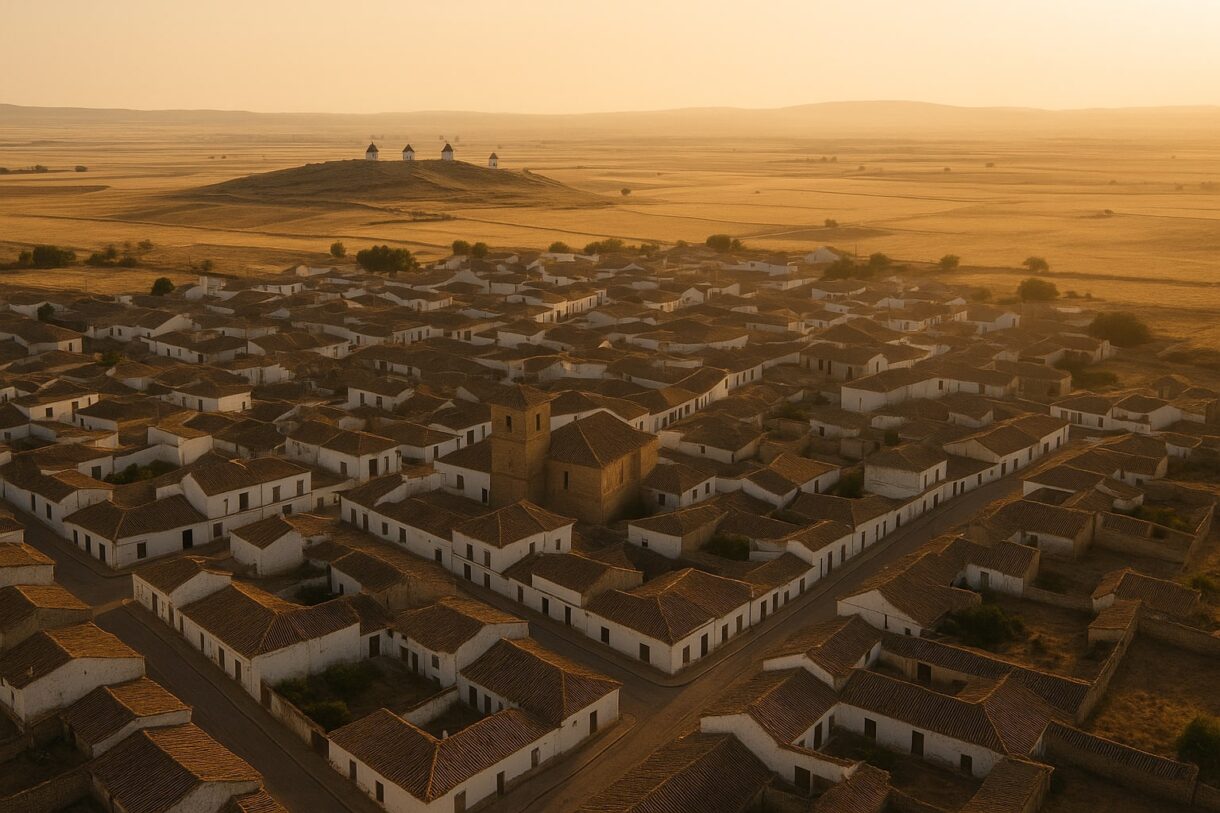
Almansa is a town of about 25,000 inhabitants in the east of the province of Albacete, in Castilla-La Mancha. It’s a little over an hour from Valencia, next to Murcia and with Alicante right nearby. That unusual corner of the map is the key to understanding Maralba’s cooking.
It’s not the deep La Mancha of Manchego gazpacho and partridge. Nor is it pure Levante of rice and oily fish. It’s the border. And that border is what ends up on the plate.
To get there from Madrid, you have three hours by car along the A-31. From Valencia, a little over an hour. From Alicante, a bit more. In other words: you can make a round trip in a day if you live in Levante, and it’s a perfect weekend escape from Madrid, combined with the Sierra de Alcaraz or the vineyards of the DO Almansa.
Who’s behind it: Fran Martínez and Cristina Díaz
Fran Martínez is the chef and the visible face. A native of Almansa, trained elsewhere but with his mind set on coming back. Cristina Díaz, his wife, runs the dining room and the wine service. It’s a classic duo for a family haute cuisine restaurant: one in the kitchen, the other in the dining room, decisions made four-handed.
They opened Maralba in 2003. The first Michelin star arrived in 2010. The second, in 2012. Since then, two stars sustained for more than a decade without easing off. In the Spanish Michelin circuit, that’s not something just anyone achieves.
Fran is not the chef on the cover of the Sunday supplement. You won’t see him on every TV programme. He puts his effort into quiet work and product. When he speaks, he talks about La Mancha, about Levante, about his suppliers. Not about himself. That’s appreciated.
What Manchego-Levantine cuisine is
Here is the distinguishing point. In Spain we have Manchego cuisine (hearty, dryland, game, cheeses, olive oil) and Levantine cuisine (rice, market garden produce, fish, salted preserves). Maralba crosses them.
Think of a creamy rice with rabbit and snails —very Levantine inland— but with touches of Manchego aged cheese. Or a fish from the Villajoyosa fish market cooked with Manchego stew techniques. Or ajoarriero taken to another dimension with coastal produce. It’s not textbook fusion; it’s cooking from an expanded territory.
And here you can indeed draw on the Campo de Montiel Extra Virgin Olive Oil PDO or the Manchego Cheese PDO with discernment. When you see a product with a quality designation on the menu, you know there’s a reason behind it.
The tasting menu: what to expect
Maralba works mainly with a tasting menu. There are two formats that rotate by season: a shorter one (around 8–10 courses) and a longer one (12–14 courses). Prices range between 110–160 € per person for food only, without wine pairing.
The wine pairing adds around 55–75 € extra, depending on the format. Cristina has a wine list with weight on the DO Almansa (garnacha tintorera from the area, a grape that almost nobody handles well outside here) and good representation from Levante and Castilla-La Mancha. If you let yourself be advised, you’ll get it right.
Some dishes that tend to appear (with seasonal variations):
- Appetisers featuring Manchego atillos, market garden pickles and a nod to Levantine salted preserves.
- A course of reinterpreted Manchego gazpacho, with crisp bread torta and very measured game.
- Creamy rices that are the house signature: field rabbit, mountain snails, and at times a version with Santa Pola prawns when in season.
- Fish from the day’s market (often from Villajoyosa or Santa Pola) with sauces built on Manchego roots.
- Segureño lamb or kid with market garden garnishes.
- Desserts with honey from La Alcarria, cheese, figs and a return to the Mediterranean with citrus.
If you enjoyed the approach of Manchego pisto with poached egg in its table-side version, here you’ll see the same root taken to three levels.
Dining room, service and atmosphere
The dining room is small (around 30 seats), which is a deliberate choice. In the dining room the pace is calm, explanations are clear without preaching, and Cristina appears at key moments. There’s no gueridon show or cheese trolleys with a dozen voices. It’s discreet fine-dining service, very Spanish, very familial.
The décor is contemporary without flashiness. No neon, no volcanic-stone tableware served by boys in leather aprons. Dressed tables, fine glassware, careful lighting. It’s appreciated when you’ve paid 150 € a head.
Noise: low. You can converse without shouting. For a four-hour meal, that’s essential.
Booking, capacity and planning
Booking is essential, weeks or months in advance on weekends and public holidays. It can be made through the official website (maralbarestaurante.es). The limit of those 30 seats forces you to plan ahead, but it also means the experience is never a restaurant packed to the rafters.
They usually close on Sunday evenings and all day Monday and Tuesday. Confirm before you drive three hours.
Quick comparison with two other stars on the map
This is where the angle becomes clear. Other two-star Michelin restaurants in Spain have average tickets of around 200–280 €/person for food only (some go much higher). Maralba sits within the 110–160 € range. And its dining room is more intimate than almost any two-star in a big city.
If you’ve been to a fashionable two-star in Madrid or Barcelona and then drop down to Almansa, the feeling is odd: same technical level, same product demands, half the price and without the media circus. The trade-off is logistics. Almansa isn’t on your route unless you deliberately add it.
Two other stars outside the major circuit that play in a similar league and that we also recommend with discernment are places like Lera in Castroverde de Campos, with its discourse of game and territory. A different profile, same philosophy of “the detour is worth it”.
We went to Maralba: verdict
We went for lunch on a Saturday, booked six weeks in advance, at a table (there’s no bar), long menu with a short pairing. Total ticket: around 200 €/person with wines and coffees.
What shone: the creamy rabbit and snail rice (perfect grain texture, a broth with hours of depth), a rock fish with its slow-reduced sauce, and a course of aged Manchego cheese with honey and truffle that was pure La Mancha refined to the finest level. The wine list focused on the DO Almansa is a pleasure: we ordered garnacha tintorera from the area and it was the pairing of the day.
What fell short: an intermediate vegetable course felt more like a technical exercise than a pleasure, and a citrus dessert lacked intensity after two hours at the table. Nothing serious, but worth noting.
Who it’s for: the diner who has already done the rounds of stars in the big cities and wants to see what happens on the periphery. For those travelling to Levante who want a high-level stop without paying capital-city prices. For a couple or a table of four. It’s not a place for a quick dinner or for bringing small children.
Rating: 3 hams 🍖🍖🍖. Essential. I’d go deliberately and take someone deliberately. My reasoning: in the balance of quality, price and experience, Maralba is ahead of two far more famous two-stars and costs considerably less.
Would I go back? Yes, and eager to try the short menu on a weekday to see how the reduced format works. Book in good time, plan the journey, and don’t treat it as a meal: it’s a full-day plan.
Albacete We were in... #almansa #cocina manchega #estrella-Michelín #gastronomia #restaurante
 Lumara: the essence of Extremadura finds its home in Chamberí
 How to Make an Authentic Valencian Paella Step by Step (for 4 people, at home and in Valencia)
 Zhen and Chinese New Year: A Menu That Turns Madrid into Shanghai
Comentarios cerrados