Pollo en pepitoria: the traditional recipe with almonds and saffron
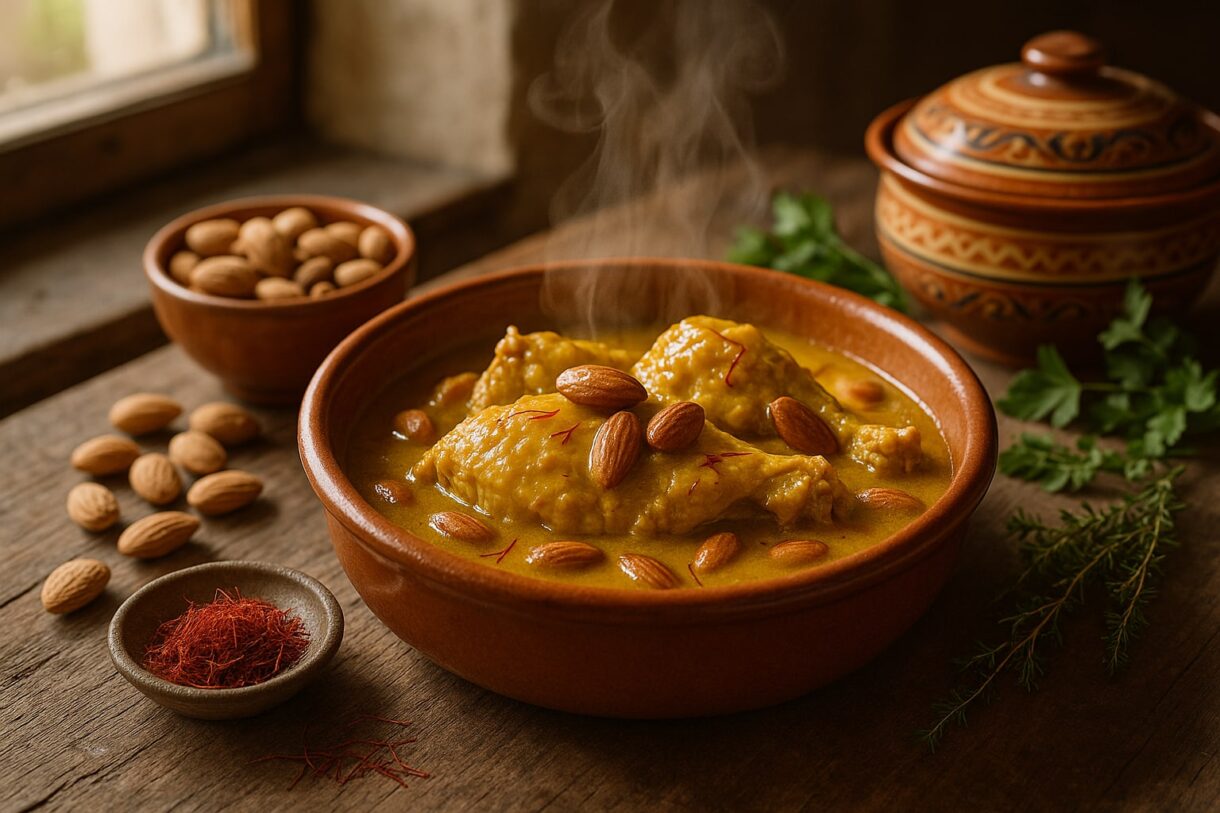
There are stews that smell like Sunday at grandma’s house, and this is one of them. The pollo en pepitoria is one of those dishes that has been on Spanish tables for centuries and that, when done right, makes you wonder why you don’t cook it more often. Almonds, saffron, cooked egg yolk and white wine. Four ingredients that, when pounded together, turn an ordinary chicken into a yellowish, silky sauce with depth.
It isn’t difficult. It requires patience and a mortar. Little else.
What is pollo en pepitoria
It is a chicken stew (originally hen) cooked in a sauce thickened with a paste of toasted almonds, cooked egg yolk, saffron and garlic. White wine and a modest stock round it out. No cream, no excess flour: the texture comes from the paste.
Andalusian origin and historical evolution
The name comes from the old French petite oie (small goose), but the technique is purely Andalusian. Stews with ground almond, saffron and spices are a direct inheritance of the cooking of Al-Andalus, which as early as the 13th century used nuts to bind sauces. Christian cooking later adopted it, replaced part of the spices with wine, and by the Golden Age it was already a noble table dish. Cervantes mentions it in Don Quixote, Martínez Montiño describes it in his Arte de cocina (1611), and it remains alive in the recipe books of Emilia Pardo Bazán and the Marquesa de Parabere.
In short: you are eating a dish with seven centuries of practice behind it.
Ingredients (4 people)
- 1 free-range chicken, cut into pieces, about 1.4-1.6 kg (or 8 thighs with drumstick)
- 1 medium onion (150 g)
- 4 garlic cloves
- 100 ml dry white wine (Verdejo or similar)
- 400 ml homemade poultry stock (if boxed, choose a low-salt one)
- 80 g raw Marcona almonds, skinless
- 2 eggs, hard-boiled
- 15-20 saffron threads (PDO La Mancha if you can)
- 1 bay leaf
- 1 slice of day-old bread (30 g)
- 40 ml extra virgin olive oil
- Flour for dredging (about 20 g)
- Salt and freshly ground black pepper
- Fresh chopped parsley for finishing
Allergens: tree nuts, egg, gluten (from the flour and bread). For a gluten-free version: replace the flour with rice flour and use gluten-free bread in the paste.
Step-by-step preparation
- Toast the almonds in a dry pan over medium heat, stirring constantly for 3-4 minutes. You want an even golden colour, not black. Set aside.
- Toast the saffron: wrap it in aluminium foil and place it on the hot pan for 30 seconds. This releases its aromas. Set aside.
- Fry the slice of bread in the hot oil, 1 minute per side until golden. Remove it and set it aside with the almonds.
- Season and flour the chicken. In the same pot with the oil (add a splash if needed), brown the pieces over high heat for 2-3 minutes per side. Aim for caramel colour, not cooking through. Remove them.
- Sauté the finely chopped onion with 2 sliced garlic cloves over medium-low heat for 10-12 minutes, until translucent and starting to brown at the edges.
- Add the white wine and raise the heat for 2 minutes to evaporate the alcohol. You will notice the smell change and the sharp sting in your nose fade.
- Return the chicken to the pot, add the bay leaf and cover with the hot stock. Cover and simmer over low heat for 35-40 minutes. Free-range chicken needs its time; if it’s industrial, 25 minutes will do.
- Prepare the paste meanwhile: in the mortar, crush the remaining 2 garlic cloves with a pinch of salt, add the toasted almonds, the fried bread, the cooked egg yolks (reserve the whites) and the saffron. Pound until you have a paste and loosen it with a ladle of the stew stock.
- Stir the paste into the pot with a wooden spoon and cook uncovered for 8-10 minutes. The sauce should coat the back of the spoon.
- Chop the cooked egg whites into small pieces and add them at the end with the parsley. Adjust the salt. Rest for 5 minutes before serving.
Tips and variations
- Hen instead of chicken: the original recipe. Increase the cooking time to 1 hour 15 minutes and the result is deeper.
- Always saffron threads. Food colouring adds nothing but flat colour. If you use PDO Azafrán de La Mancha, 15 threads are more than enough.
- Common mistake: using too much flour when dredging the chicken. Shake the pieces well before frying or the sauce will turn pasty.
- If the sauce is too thin: remove 3-4 pieces of chicken, blend part of the sauce with a hand blender and return everything to the pot.
Pairing and serving
Serve it in a clay pot or deep plate, with white rice pilaf or panadera-style potatoes on the side. Bread is essential for mopping up the sauce.
For wine, an aged white handles the almonds and saffron well: a Rueda fermented in barrel or an old-school white Rioja. If you prefer red, something light, a young Mencía from Bierzo.
Frequently asked questions
How long does it keep in the fridge? Up to 3 days in an airtight container. In fact, it improves the next day: the paste blends in better.
Can it be frozen? Yes, for up to 2 months. Thaw in the fridge for 24 hours and reheat over low heat with a splash of stock, because the sauce thickens as it cools.
Can I use breast instead of thighs? You can, but it turns dry. If it’s all you have, reduce the cooking time to 15 minutes and add it once the sauce is already made.
What do I do with the egg whites if I don’t want them chopped on top? Traditionally they go in, but you can keep them for a salad the next day. It’s fine to skip them.
If you enjoy slow-cooked classics of traditional Spanish cuisine, take a look at traditional pisto manchego with poached egg: another recipe that allows no rush and no shortcuts.
Tasty Things Gastronomy Stories Recipes #almendra #azafran #gastronomia #pollo #receta


 Lumara: the essence of Extremadura finds its home in Chamberí
 How to Make an Authentic Valencian Paella Step by Step (for 4 people, at home and in Valencia)
 Zhen and Chinese New Year: A Menu That Turns Madrid into Shanghai
Comentarios cerrados