3D printing comes to the kitchen: moulds, plating and custom pieces in restaurants and bakeries
3D printing is revolutionising gastronomy with personalised moulds, unique utensils and innovative designs for restaurants and pastry shops.
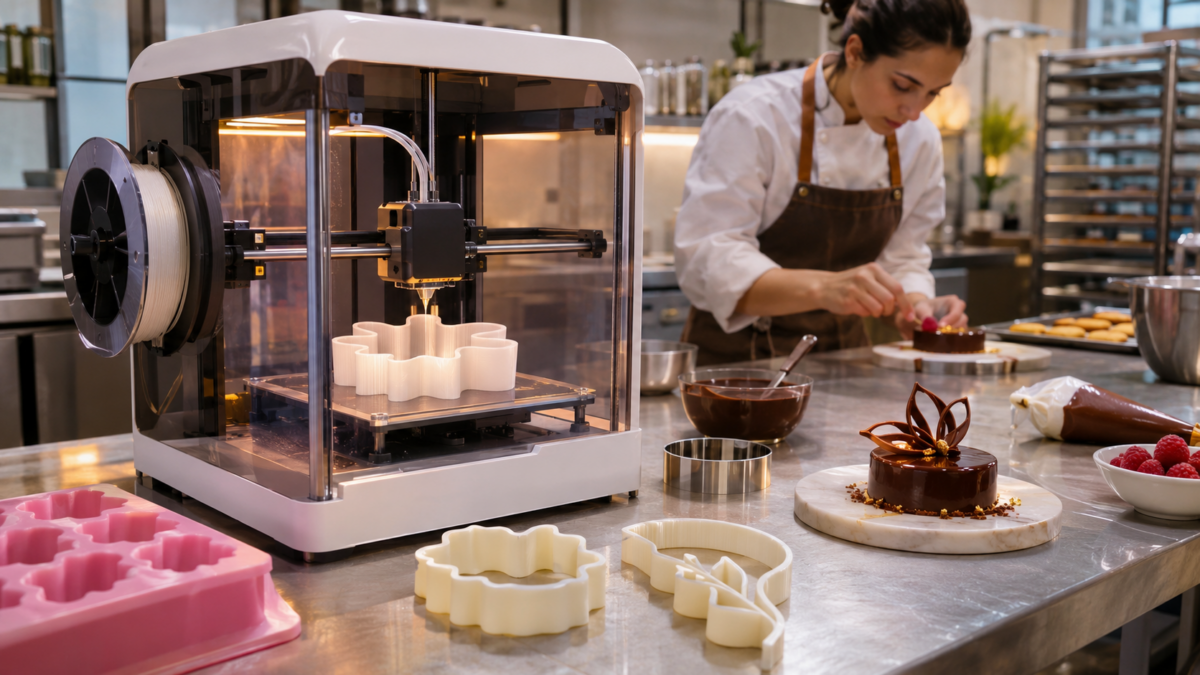
When we think of gastronomic innovation, we usually picture siphons, rotary evaporators or spherification techniques. Yet in recent years an unexpected ally has appeared in kitchens and bakeries: the 3D printer. Pastry chefs who create their own moulds, restaurants that design unique supports for a dish on the tasting menu, chocolatiers who produce cutters with a client’s logo. What seemed like science fiction a decade ago is now within reach of a small business, and it is worth knowing what this technology really offers and what precautions it requires.
From sketch to table in a couple of days
The great appeal of 3D printing in hospitality is personalisation. A chef can draw the shape of a mould for a dessert, commission the design or model it personally, and have a first version the next day. If the texture or size is not convincing, the file is corrected and printed again. There is no need to order minimum runs from a manufacturer or wait weeks. This speed favours exactly what fine dining values most: trying, making mistakes and trying again.
The most common applications are very specific. Biscuit and fondant cutters with exclusive shapes, templates for decorating with cocoa or icing sugar, stamps for marking breads and doughs, and master patterns from which food-grade silicone moulds are made. Supports for canapés, stands for tasting spoons, menu holders and small decorative elements for the dining room are also printed.
Silicone moulds: the professionals’ trick
Few people know that the printed mould rarely touches the food directly. The usual method is to print a master piece, with the exact shape of the chocolate or dessert, and pour certified food-grade silicone over it. Once cured, that silicone is what comes into contact with the food and can be washed, baked or frozen without problem. In this way the bakery obtains its own hygienic and durable mould, with minimal investment. It is a perfect method for pastry shops that want a recognisable signature piece, or for restaurants that wish to reproduce the shape of a local product in a dessert.
Hygiene: what must not be overlooked
Here it is worth being serious. A piece printed by filament deposition has small lines between layers where food residue and bacteria can accumulate, so it is not advisable for repeated contact with untreated food. Moreover, not all materials are certified for food use, and nozzles and colourants also play a role. For single-use elements or cutters that briefly touch a dough, there are acceptable options, but the material’s technical data sheet must always be checked and, where appropriate, a suitable coating applied. In a professional setting, moreover, any utensil must fit within the kitchen’s own control plan. The safest rule remains the intermediate silicone mould method.
In the dining room and for the brand too
Beyond the kitchen, a restaurant can use 3D printing to reinforce its identity. Menu holders with the silhouette of the premises, card holders, table numbers, small lamps or shop-window models are made for little money and changed when the season is renewed. Decorative pieces do not touch food, so they can be printed without so many restrictions and offer plenty of scope with colours and finishes. And when a dish needs a support that does not exist on the market, there is no need to settle: it is designed to measure.
How to start without complications
Anyone who wants to take the first step has two routes. The first is to commission pieces from a printing service or a designer, ideal when only a few shapes are needed each year. The second is to have an in-house machine in the bakery, which is reasonable if moulds change frequently. Today desktop printers are relatively simple to use, and at the Impresora-3D shop you can compare everything from basic machines to materials designed for different uses. It is advisable to begin with modest projects, such as a cutter or a stamp, and gradually learn the modelling software.
Technology will never replace the palate or the hands of the cook, but it does expand the repertoire of what is possible. In a sector where diners seek experiences worth remembering, an exclusive mould or a plating that cannot be found anywhere else can make all the difference. Sometimes the surprise of a dish begins long before it reaches the stove: in a digital file and on a spool of filament.


0 comentarios · Comentar