Cordoban salmorejo: the traditional recipe with exact proportions
The Cordoban salmorejo recipe with the official proportions of the Gastronomic Brotherhood: 1 kg of tomato, 200 g of bread, 100 ml of EVOO, 1 garlic clove and 10 g of salt. Step by step, tricks and real differences from gazpacho.
I come from the kitchen with the blender jug stained and my hands smelling of garlic. Time to talk about Cordoban salmorejo, which becomes the emergency fridge staple of half of Spain as soon as the heat arrives. And it’s worth doing properly, because what many terraces in Madrid serve with supermarket bread and pale tomato is not salmorejo: it’s a sad pink purée.
The good news is that making it at home costs less than you’d think. The bad news is that if you skip the proportions, you end up with something else. Let’s get to the point.
What Cordoban salmorejo is (and why it isn’t a thick gazpacho)
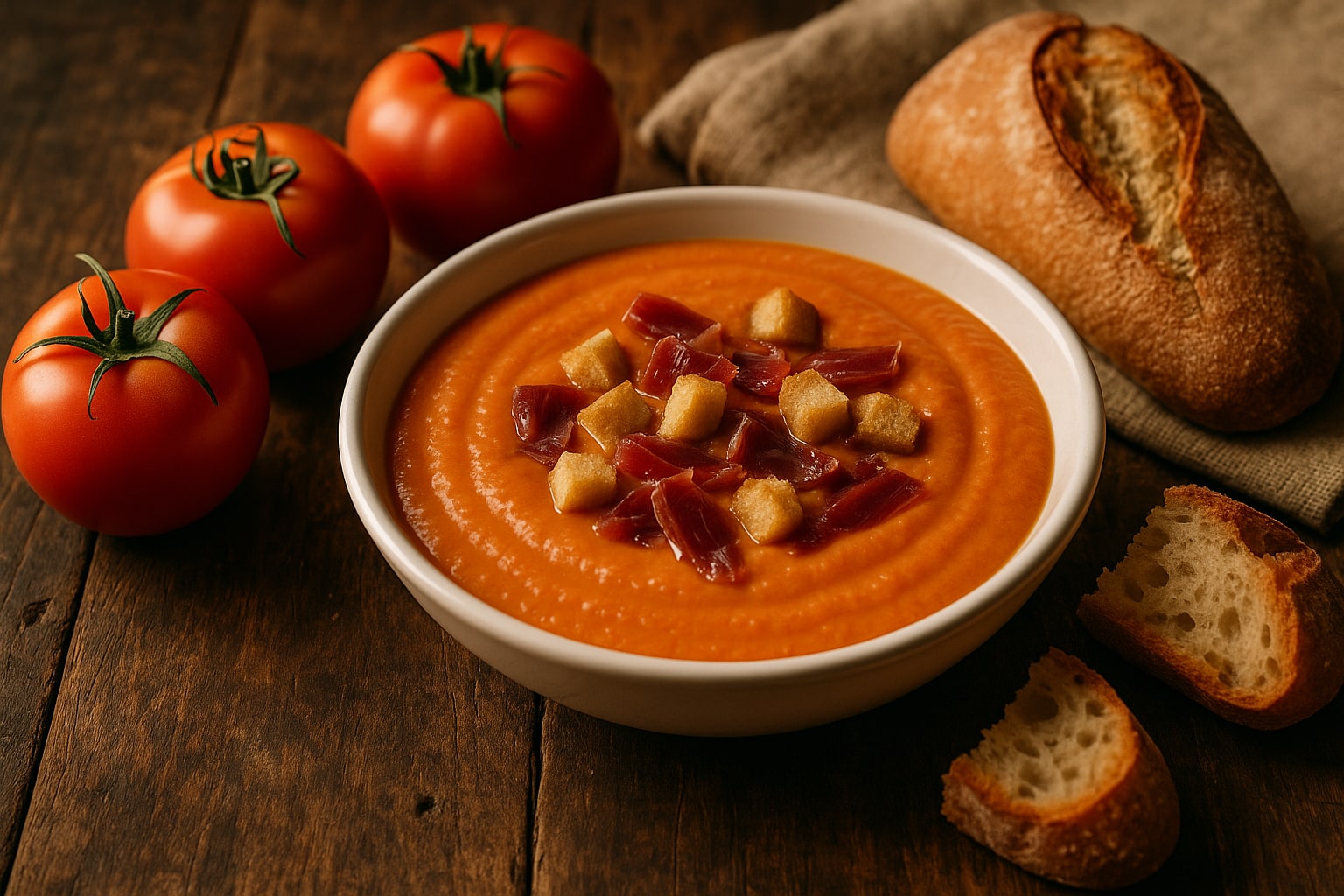
Salmorejo is a cold tomato cream made with bread, oil, garlic and salt. Full stop. It has no pepper, no cucumber, no vinegar and no water. It is served very cold, topped with chopped Iberian ham and boiled egg, and a thread of extra virgin olive oil when serving.
It is a one-dish meal in Córdoba, a tapa in the rest of Andalusia and a starter in the rest of the country. It keeps well in the fridge, takes 15 minutes to prepare with a powerful blender, and can be frozen if you plan ahead.
The official proportions of the Salmorejo Brotherhood
The Gastronomic Brotherhood of Cordoban Salmorejo set the canonical proportions years ago to stop every bar doing whatever it liked. These are them, for 4 people as a starter or 2 as a main course:
- 1 kg of tomato ripe (pear or beef variety, very red).
- 200 g of bread of Cordoban telera or day-old candeal bread, crust removed.
- 100 ml of extra virgin olive oil (EVOO), preferably of the picual or hojiblanca variety.
- 1 garlic clove (about 5 g, peeled and germ removed).
- 10 g of salt.
The key proportion is the bread-to-tomato ratio: 20% bread by weight of the tomato. That is what gives the dense, velvety texture. If you go below 15% you get a thick gazpacho; above 25%, a stodgy paste.
Ingredients: what to buy and what to avoid
Tomato: pear tomatoes are the easiest to find in Madrid. If you get hold of ripe ones in season, even better. They should yield when pressed. Hard, pale greenhouse tomatoes, no.
Bread: Cordoban telera if you can find it (some Andalusian bakeries in Madrid bring it in). If not, candeal bread or good day-old country bread. Forget sliced sandwich bread: it contains sugar and fats that spoil the balance.
EVOO: don’t skimp here. A Extra Virgin Olive Oil of the picual variety with a little bitterness gives it character. If you have a PDO to hand (Priego de Córdoba PDO, Estepa PDO, Baena PDO), you’re in good shape.
Garlic: one clove, germ removed. Two cloves and nobody will speak to you the next day.
Step-by-step preparation
-
Blanch the tomatoes (2 minutes). Score a cross at the base, submerge for 30 seconds in boiling water and transfer to iced water. The skin comes off easily. This step is optional but makes a difference in texture.
-
Chop and salt (1 minute). Cut the tomato into quarters, remove the stem and put it in the blender jug with the 10 g of salt. Let it rest for 5 minutes: it will release water and blend more easily.
-
Blend the tomato (2 minutes). Blend at full power until you have a smooth cream. If your blender is weak, pass it through a fine sieve to remove skins and seeds.
-
Add the bread (5 minutes’ rest). Add the 200 g of torn bread and the garlic. Let the bread soak for 5 minutes. Don’t soak it in water beforehand: the tomato already provides the liquid needed.
-
Blend again (2 minutes). Blend until there are no lumps. You’ll see it gain body, moving from intense red to a coral orange.
-
Emulsify with the oil (1 minute). With the blender running at medium speed, add the 100 ml of EVOO in a fine stream. This emulsion is what gives the pale orange colour and silky texture. If you add all the oil at once, it will split.
-
Chill (at least 2 hours). Cover and put in the fridge. Really cold, not just cool.
Tricks and common mistakes
- Pale pink instead of coral orange: you’ve used too much bread or the oil hasn’t emulsified enough. Blend for another minute at high speed.
- Tastes of harsh raw garlic: blanch the clove for 30 seconds in boiling water before adding it. It softens the flavour without losing aroma.
- Grainy texture: blender not powerful enough. Pass it through a fine sieve or chinois.
- Thermomix version: 4 minutes at progressive speed 5-10 with everything except the oil, then 1 minute adding the oil in a thin stream through the lid opening.
Presentation and classic garnish
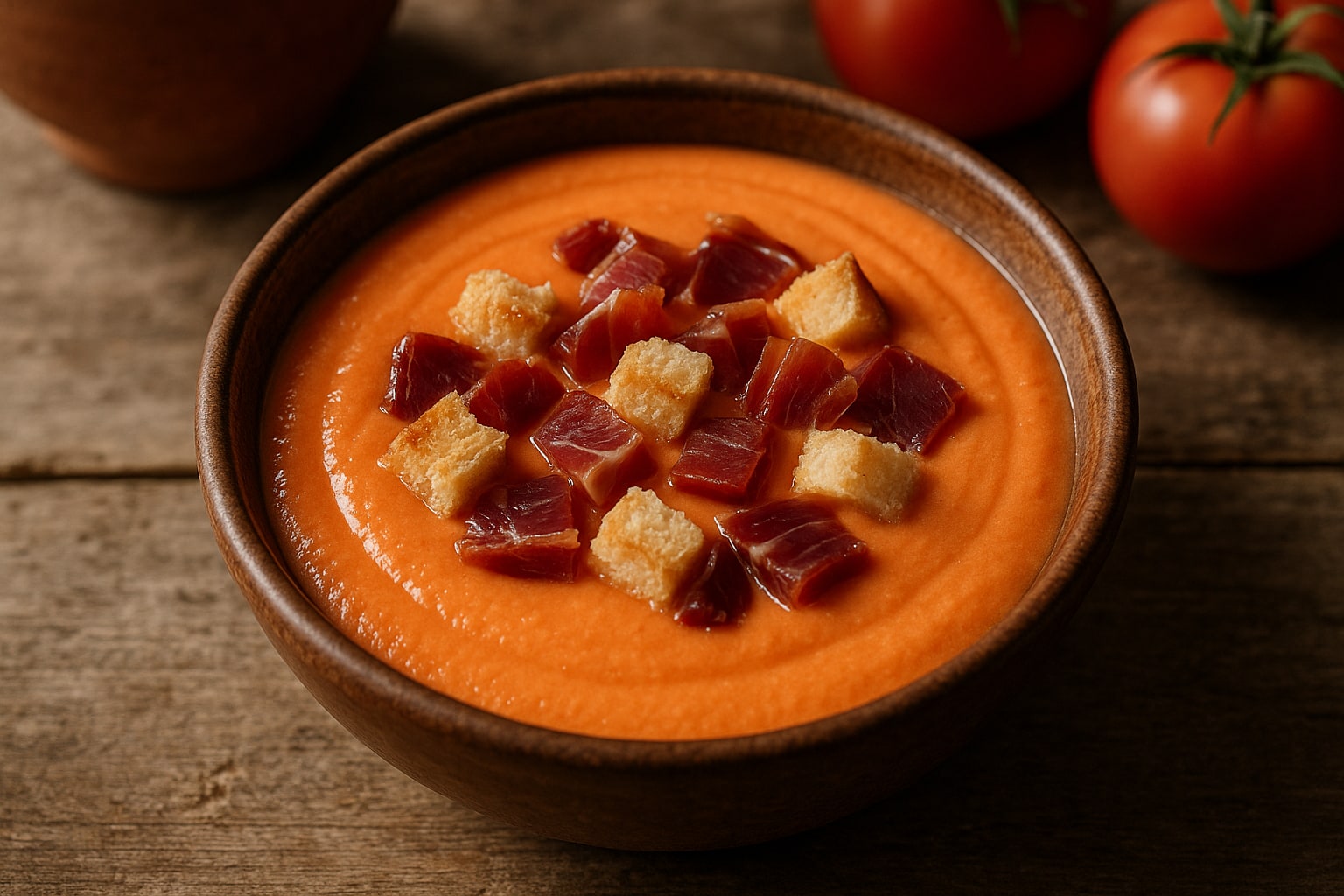
Served in a deep bowl, very cold. On top: Iberian ham finely chopped by knife (about 20 g per person) and chopped boiled egg (half an egg per portion). A final thread of raw EVOO. Some add croutons; in the city of Córdoba, they usually don’t.
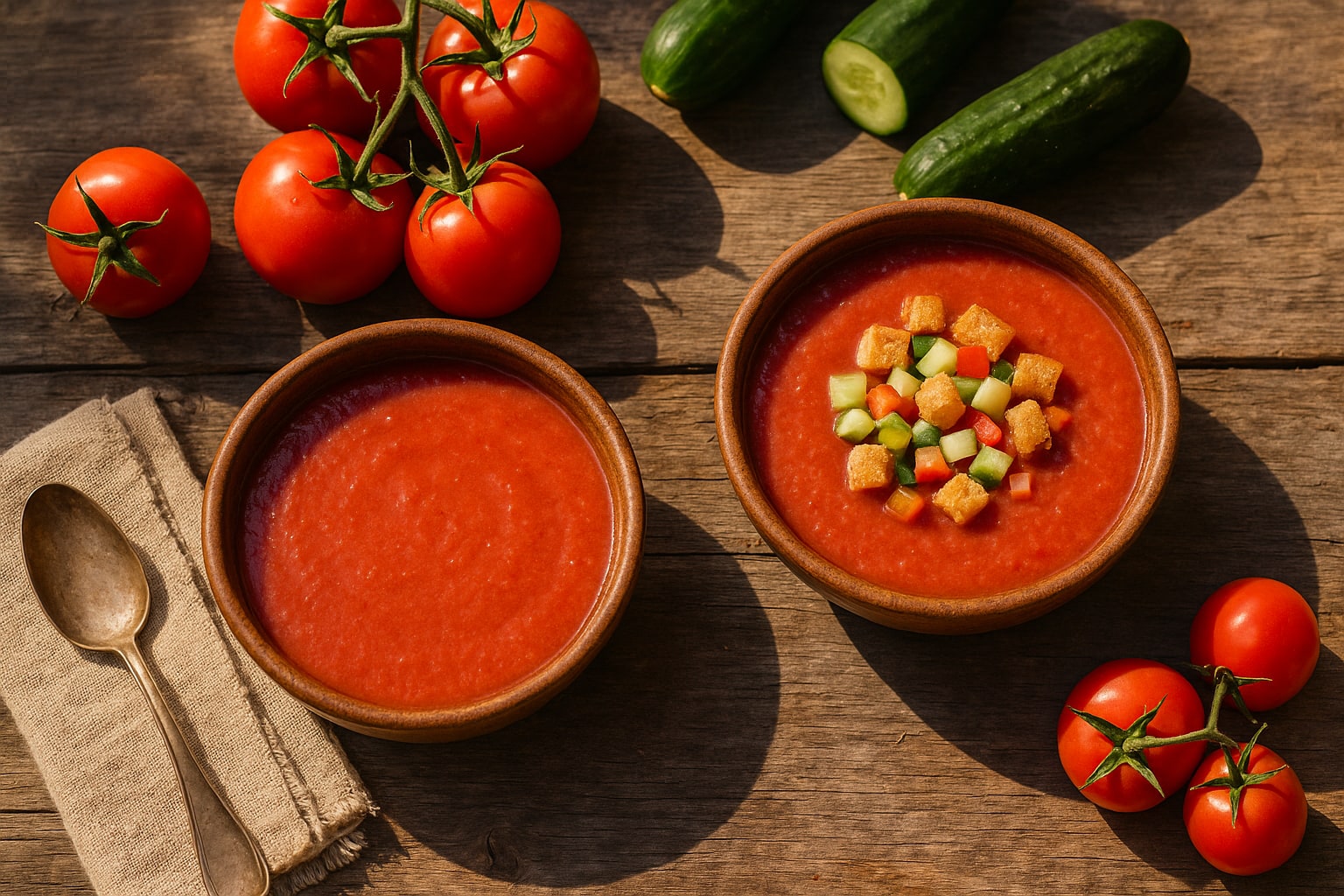
Difference between salmorejo and gazpacho
Although they share tomato and bread, they have little in common:
| Salmorejo | Gazpacho | |
|---|---|---|
| Ingredients | Tomato, bread, EVOO, garlic, salt | Tomato, bread, EVOO, garlic, salt, pepper, cucumber, vinegar, water |
| Texture | Dense cream | Cold soup, more liquid |
| Colour | Coral orange | Intense red |
| Served | In a bowl, with egg and ham | In a glass or bowl, sometimes with chopped garnish |
Frequently asked questions
How long does it keep in the fridge? Three days if covered well. After the fourth day, the garlic oxidises and a metallic aftertaste appears.
Can it be frozen? Yes, for up to 2 months in a glass jar leaving a finger’s width free. Defrost in the fridge and blend for 30 seconds before serving to restore the emulsion.
How do you make it gluten-free? Replace the 200 g of bread with 200 g of day-old gluten-free bread. The texture is slightly less velvety, but it works.
What wine pairs well? A very cold fino or manzanilla sherry. If you don’t go for fortified wines, a young Verdejo from Rueda or a light Albariño will do.