Lera in Castroverde de Campos: game, dovecote and wood-fired oven in the heart of Tierra de Campos
Game cooking with a sense of judgement, an 18th-century dovecote and a wood-fired oven in a village of 300 inhabitants. This is how they eat at Lera, Luis Alberto Lera's project in deep Zamora.
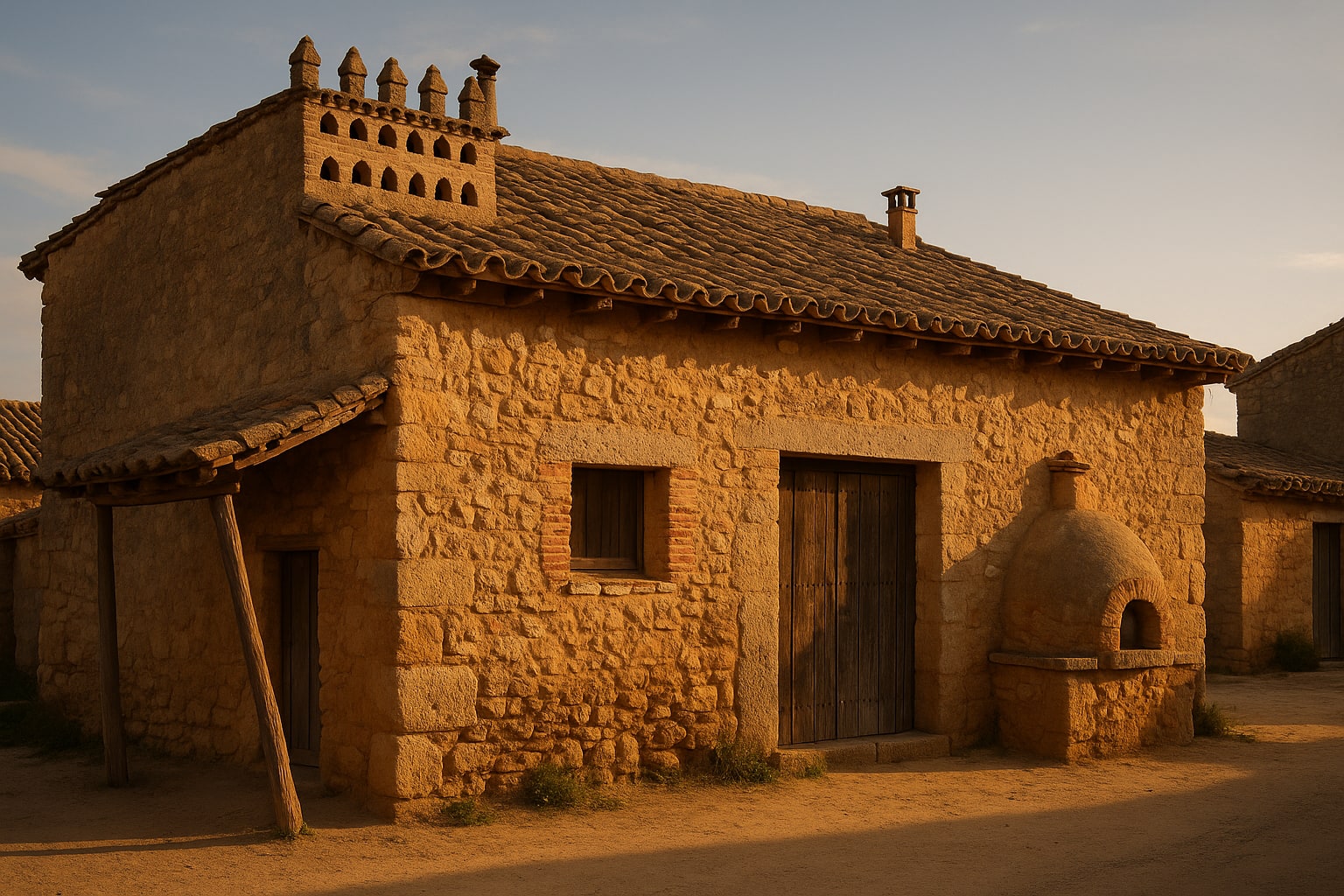
There are restaurants you simply arrive at, and others you make a pilgrimage to. Lera, in Castroverde de Campos (Zamora), is one of the second kind. It’s an hour and a half from Valladolid, two-and-a-bit hours from Madrid, and on the GPS it appears as a village of barely 300 inhabitants surrounded by wheat fields. When you park and see the brick and adobe building, you understand that here game cooking is not a seasonal nod: it is the house.
I went on a November Saturday with two hunting friends (one of them more into tapas than shotguns, for the record). A long, unhurried lunch, with the rain falling outside. What follows is what we tasted and why the detour is worth it.
Where Lera is and why the place matters
Castroverde de Campos sits in the heart of Tierra de Campos, that region straddling Zamora, Valladolid, León and Palencia that looks like a sea of cereal. A horizontal landscape, enormous skies, adobe dovecotes every two kilometres. Here hunting is not a weekend hobby: it has been part of the agricultural calendar for centuries.
The restaurant was opened by the Lera family in 1973 as a eating house for hunters. Half a century later, Luis Alberto Lera — a son of the house, trained elsewhere and back in the village — has turned it into a national reference for game cooking, with a Michelin star that confirms what word of mouth had already established.
Luis Alberto Lera: the chef who came back to the village
Luis Alberto worked in Madrid kitchens before taking over the family business. What is interesting is that he didn’t return to “modernise” his mother’s and grandmother’s recipe book, but to organise it, apply just enough technique and give it context. Partridge escabeche is still partridge escabeche. But the bird is boned with patience and the liquid reduced to exactly the right point.
He is a chef who names his suppliers. The hunter who brings him the woodpigeons, the shepherd who supplies the spring lamb, the village baker. In an era when “zero-kilometre produce” has become a catchphrase, here it is literal: much of what you eat has travelled less than 20 kilometres.
The dovecote: not decoration, but a larder
This is the detail that sets Lera apart from almost any other game restaurant in Spain. They have a working dovecote, restored and in use. The dovecotes of Tierra de Campos are circular or square adobe structures with interior nesting niches, which for centuries were used to raise pigeons for meat and to harvest the droppings as fertiliser.
At Lera, the dovecote is not a museum. It is a larder. The woodpigeon and the wild dove appear on the menu according to season, and Luis Alberto himself will explain — if you ask — how the cycle is managed. Eating a dovecote squab here means something different: it is not an ingredient that arrives in an insulated box, it is the bird that was roosting 200 metres away.
The wood-fired oven: why it changes the result
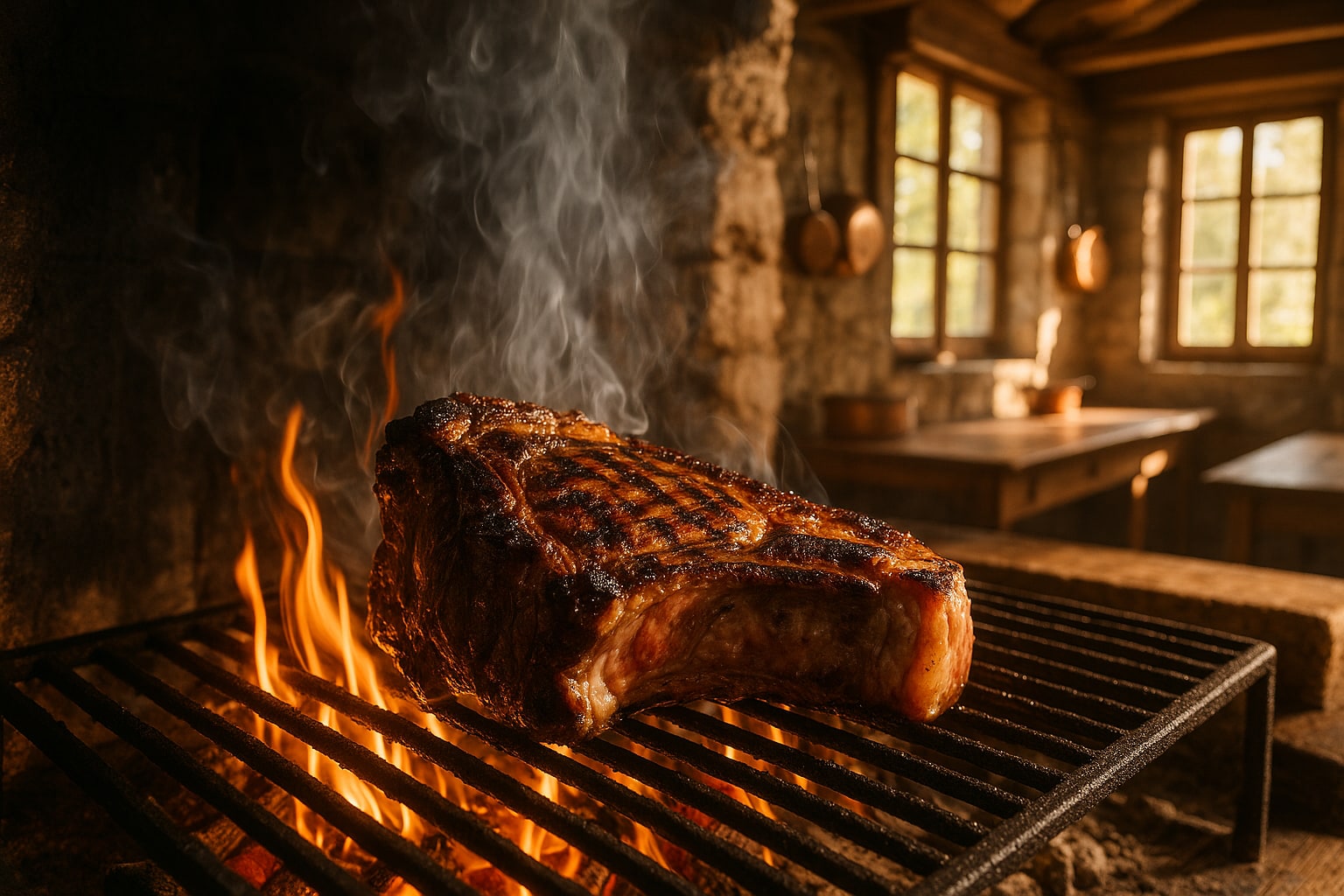
The other defining element is the holm-oak wood-fired oven, which they have used since the restaurant’s beginnings. This is where the long roasts go: spring lamb, suckling pig, and some large game when the time comes. The difference from a convection oven is not marketing. It is a matter of humidity, radiant heat and time.
A Lechazo de Castilla y León IGP spring lamb cooked in the wood-fired oven, at descending temperature for two hours and a bit, comes out with crackling skin and meat still juicy. In an electric oven you can get close, but the underlying flavour — that subtle smoky note — cannot be replicated. Full stop.
The menu: what to order at Lera
There is a short à la carte and two tasting menus. We went à la carte because we wanted to choose. These are the dishes we tried, in order:
- Red-legged partridge escabeche: a clean piece, a gentle escabeche, confit onion underneath. Vinegar well measured, nothing sharp. The house signature dish and, rightly, one of the most ordered.
- Hare croquettes: a dense yet fluid béchamel, a deep game flavour, a fine breadcrumb coating. Five units per portion, around €14.
- Roasted woodpigeon with its jus and seasonal mushrooms: the breast at its pink point, the confit leg served separately. Local mushrooms (níscalos that day). This is the dish to come for if you want to understand what makes Lera different.
- Wood-fired roast spring lamb: a half portion to share. Crackling skin, meat that falls from the bone, jus on the side for mopping up bread. Served with endive and pomegranate salad.
- Fried milk with cinnamon ice cream: a classic dessert well executed. Thin crust, creamy interior, cinnamon kept in check.
They also offer a game tasting menu (around 8-9 courses) at roughly €75-85 without drinks, depending on the season and availability of game. If it’s your first time and you enjoy hunting, the tasting menu is the most honest way to understand the house.
Service and the wine list
A calm dining room, widely spaced tables, cloth tablecloths. The service is run by the family team and it shows: they tell you where each piece comes from without pretension, and if you’re torn between dishes they steer you without selling you the most expensive one.
The wine list draws heavily on Castilla y León — Toro, Arribes, Bierzo, Cigales — at sensible prices. They recommended a red from Arribes del Duero, made from the juan García grape, which matched the woodpigeon beautifully. Asking about the local wines is the way to go: nothing comes in from outside that the region doesn’t already do well.
Price and value for money
A la carte lunch with starters, a main, dessert and a bottle of wine shared between three: average bill of roughly €75-90 per person. The tasting menu with pairings rises to €110-130 per person. It isn’t cheap for the area, but for what it offers — produce, technique, context — it is well priced.
Compared with equivalent Michelin-starred restaurants in Madrid or Barcelona, Lera is a bargain. The difference is that here you aren’t paying for city-centre square metres: you are paying for game, wood-fired oven and dovecote.
If you’re planning a gastronomic getaway and are interested in options beyond the Madrid circuit, this guide to charming restaurants for a lunch out of town complements this one well.
When to go: the season rules
Hunting follows a calendar. If you come for woodpigeon, partridge or hare, the peak runs from October to February. Outside the season the menu remains interesting — escabeches, dishes using preserved game, spring lamb all year round — but to taste fresh game you need to time your visit.
They close on Sunday evenings and Mondays. Booking is essential in advance: there are few tables and autumn-winter weekends sell out fast. A direct phone call is better than booking platforms.
Verdict: 3 hams
Lera earns 3 hams. It’s one of those places you take someone on purpose, even if it means three hours in the car. The combination of a working dovecote, a holm-oak wood-fired oven and a chef who understands his territory is not replicated in many places in Spain. If you like hunting and haven’t been, you have homework to do. If you don’t like hunting, it may not be your restaurant, and that’s fine to admit.
Who it’s for: the curious diner with an interest in seasonal produce and living tradition. I’ll be back for sure, probably in January, when the woodcock is in its prime.