Propolis: the natural antibiotic of the beehive and how to use it in cooking
What propolis is, why it is called the natural antibiotic of the beehive, and how to incorporate it into everyday recipes with clear dosages, formats and contraindications.
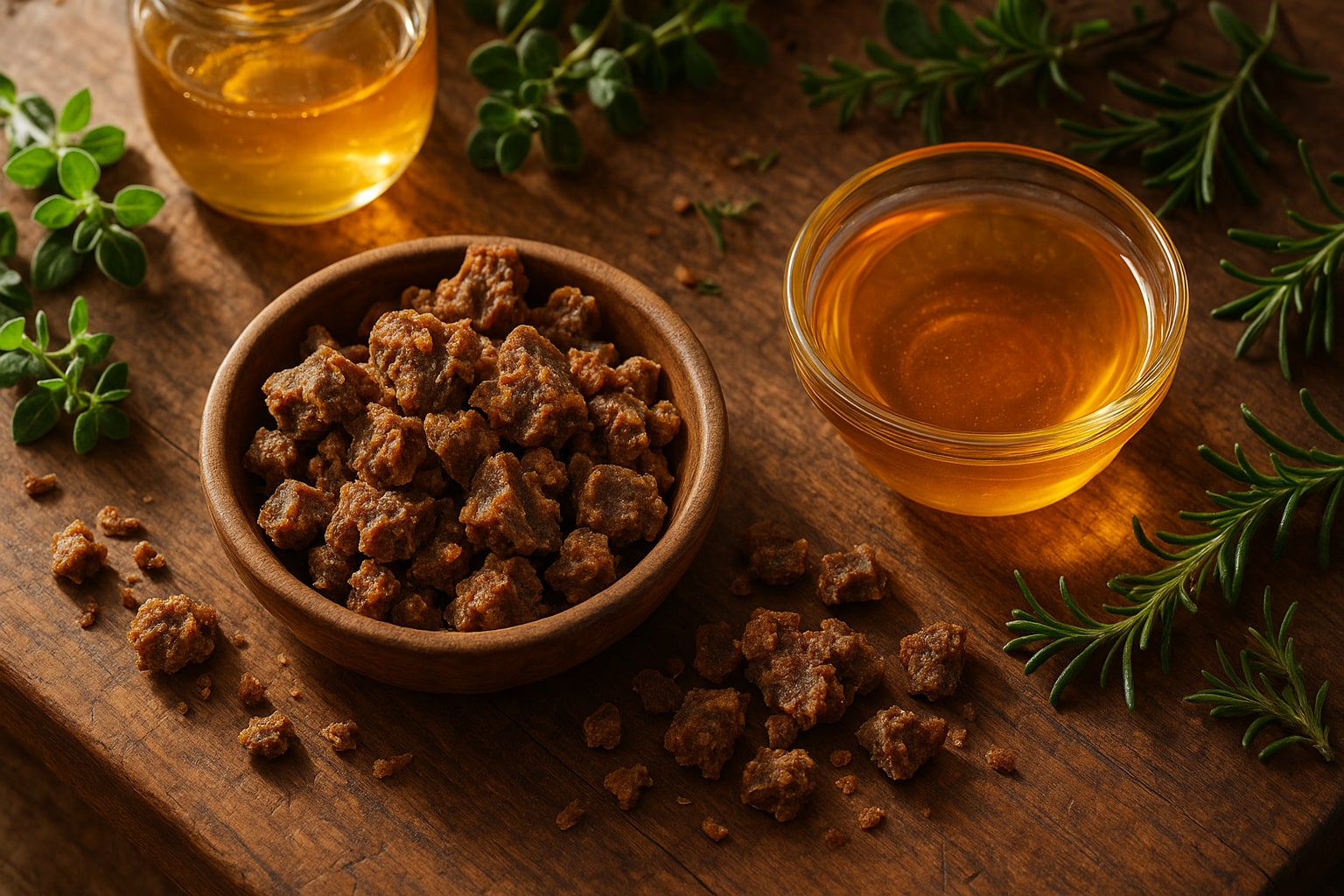
From the tincture bottle your mother keeps for sore throats to the spoonful of dark honey you see in beekeepers’ shops, propolis has been making its way through Spanish pantries for years, yet most of us don’t really know what to do with it beyond taking it when our throat itches. That’s a shame, because in the kitchen it offers more than it seems: it flavours honeys, blends into vinaigrettes, rounds out infusions and even pairs well with dark chocolate.
Here is what you need to know to use it sensibly, without falling for the marketing of a “miracle superfood” or fearing to try something new.
What propolis is and why it is called the natural antibiotic of the beehive
Propolis (or propolis resin) is a resin that bees make by mixing exudates from tree buds and bark — poplars, birches, conifers — with their own secretions and wax. They use it to seal cracks in the hive, embalm intruders and keep the interior aseptic. A well-propolised hive is, basically, an operating theatre.
The “natural antibiotic of the beehive” nickname comes from here: it contains flavonoids, phenolic acids (notably caffeic acid and its derivatives, such as CAPE) and essential oils with antimicrobial activity demonstrated in vitro against various bacteria and fungi. Be careful with the word “antibiotic”: it does not replace the amoxicillin your doctor prescribes. It is a functional ingredient, not a drug.
Composition and properties of propolis
The chemical profile varies enormously depending on botanical origin. A European poplar propolis does not have the same composition as a green Brazilian one (from Baccharis) or the red Cuban one. In general terms:
- 50-55% plant resins and balsams.
- 30% waxes.
- 10% aromatic essential oils.
- 5% pollen.
- 5% minerals and various compounds.
Among the most studied properties of propolis are: antioxidant (due to the flavonoids), local anti-inflammatory, antiseptic and wound-healing effects when applied topically. In the kitchen, we are mainly interested in its aromatic profile — resinous, woody, with a balsamic background — and its ability to extend the shelf life of homemade honeys and syrups.
Formats: tincture, alcohol-free extract, powder and raw
Before adding it to a recipe, decide which format suits you:
- Hydroalcoholic propolis tincture: the most common. Usual concentration between 20 and 30%. Intense flavour, slightly spicy and bitter. Ideal for dripping into cold infusions, vinaigrettes or glazes.
- Aqueous or glycerinated extract (alcohol-free): suitable for children over 3 years old, pregnant women (with medical advice) and people who avoid alcohol. Milder flavour.
- Propolis powder: dissolves unevenly. Useful for mixing with honey or incorporating into baked doughs.
- Raw propolis (resin chunks): the kind the beekeeper scrapes off. Very aromatic, hard to dose. For infused honeys.
If you’re just starting, go for a 20% tincture from a local beekeeper. A 30 ml bottle costs around 8-15 € and lasts for months.
Recommended dose and how to dose it in recipes
The recommended dose of propolis for healthy adults, according to common apitherapy literature, ranges from 10 to 30 drops a day of 20% tincture, spread across 2-3 doses. In cooking, to avoid ruining a dish with bitterness, think in more discreet “gastronomic” doses:
- Vinaigrette for 4 people: 6-8 drops.
- 250 g jar of infused honey: 15-20 drops of tincture or 2 g of raw propolis.
- Individual infusion (250 ml): 3-5 drops.
- Cake glaze or ganache (300 g): 10-12 drops.
Golden rule: propolis flavours, it does not take centre stage. If the dish tastes like cough syrup, you’ve overdone it.
How to use propolis in the kitchen: five applications that work
This is where propolis stops being “herbalist stuff” and becomes just another ingredient. Five tried-and-tested ideas:
- Homemade propolis honey. Mix 250 g of rosemary honey with 20 drops of 20% tincture. Stir, let it rest for 48 h and use it over cured cheese, toast with salted butter or to glaze oven-baked ribs.
- Balsamic vinaigrette with propolis. 60 ml of extra virgin olive oil (a Sierra de Cazorla PDO EVOO works well), 20 ml of Jerez vinegar, 1 teaspoon of Dijon mustard, 6 drops of tincture, salt. Emulsify. Brilliant with endives and walnuts.
- Lime blossom or chamomile infusion with 3 drops added at the end (off the heat, so the aromatics don’t evaporate).
- 70% dark chocolate ganache with 10 drops per 200 g. Propolis’s bitterness pairs well with cocoa.
- Marinade for Iberian pork loin: oil, garlic, thyme, pepper and 8 drops for 500 g of meat. It adds an interesting balsamic undertone.
A note: never boil it. The alcohol evaporates and the volatile compounds are lost. Add it off the heat or cold. If you’re interested in the world of the hive, we’ve already discussed how to incorporate bee pollen into breakfasts with similar logic.
Contraindications and allergens
Here we must be honest: propolis is one of the bee products with the highest rate of allergic reactions, especially contact dermatitis. Avoid it if:
- You are allergic to bee venom, pollen or hive products.
- You have uncontrolled bronchial asthma.
- You are pregnant or breastfeeding (consult first).
- You are giving it to a child under 3 years old (better not).
Test first with 2-3 drops and wait 24 h. If you notice persistent throat irritation, swelling or a rash, stop.
How to choose and store good propolis
Look for tincture from a Spanish beekeeper with stated origin (Sierra de Guadarrama, La Alcarria, Galicia…), a strength between 20 and 30%, amber glass bottle and a bottling date. Store it at room temperature, away from light. It keeps perfectly for 2-3 years. Raw propolis in a sealed jar is practically eternal.
If you’re interested in other hive products and their nuances, it’s worth reviewing the differences between fresh and freeze-dried royal jelly: the buying criteria are very similar.
Frequently asked questions
Can propolis be cooked at high temperature? Not ideal. Above 60 °C it loses volatile compounds and sensitive flavonoids. Add it at the end or cold.
How long does honey infused with propolis keep? In a sealed glass jar in a dark pantry, 6-12 months without problem. Honey is itself a natural preservative.
Is propolis suitable if I have coeliac disease? Yes, it contains no gluten. Check the commercial product’s label in case it includes excipients.
Can I replace alcoholic tincture with aqueous extract in recipes? Yes, with an adjustment: use twice the number of drops to compensate for the lower concentration of active principles, and note that the flavour will be milder.