Confit artichokes in oil: low temperature and long cooking time
The step-by-step technique for confiting artichokes in olive oil, with exact temperatures, real cooking times, and how to keep them for weeks in the fridge.

There are dishes that get ruined by rushing. Confit artichokes are one of them. If you put them in boiling oil expecting quick results, they end up tough on the outside and raw on the inside. Confit works the opposite way: low heat, long time, patience. The reward is an artichoke that falls apart at the touch of a fork, with a flavor that has nothing to do with the jarred supermarket version.
This is a fridge-staple recipe. You prepare a batch on Sunday and have tapas sorted for the whole week: on toast, with a poached egg, in a quick last-minute pasta, or simply with a little flaky salt. If you like Catalan oven-roasted escalivada, this confit follows the same slow-cooking approach for vegetables, but with the oil technique as the absolute star.
What confiting means and why it works with artichokes
Confiting means cooking a food submerged in a fat—oil, in this case—at a low, constant temperature for a long time. There is no boiling, no aggressive bubbling. The oil acts almost like a fatty water bath: it transmits heat evenly and slowly, without harming the texture.
Artichokes have tough fibers and plenty of water inside. If you boil them, the water escapes quickly and the fibers become chewy. If you confit them, the oil slowly penetrates, replacing that water, and the fibers soften without breaking. The result is a buttery texture, not a rubbery one.
Ideal temperature for confiting artichokes
This is the detail that truly makes the difference. The ideal temperature for confiting artichokes is between 85 and 100 °C. It should never reach the 180 °C that oil hits in a normal fry.
How do you know you’re in range without a kitchen thermometer? Watch the bubbles: they should be small and sparse, almost occasional, never an aggressive simmer. If the oil smokes, you’ve gone too far. Lower the heat to the minimum and wait for it to settle before continuing.
| Method | Temperature | Approximate time | Result |
|---|---|---|---|
| Skillet on very low heat | 85-100 °C | 35-45 minutes | More visual control, bubbling must be watched |
| Conventional oven | 130-140 °C (oven temperature, not oil temperature) | 45-55 minutes | More convenient, even cooking, less supervision |
| Pot on medium-high heat (common mistake) | >150 °C | 15-20 minutes | Frying, not confiting: rubbery texture |
Ingredients for olive oil confit artichokes
Quantities for 4 people as a tapa or side dish:
- 12 fresh artichokes (or 500 g of already cleaned artichoke hearts)
- 500 ml of mild extra virgin olive oil (an Arbequina variety works well, it won’t overpower the artichoke flavor)
- 4 whole garlic cloves, unpeeled
- 1 bay leaf
- 1 lemon (the juice and the zest, without the white pith)
- 1 teaspoon fine salt (5 g)
- 5-6 black peppercorns
If you find Alcachofa de Tudela IGP, even better: it has less fiber and a meatier heart, so the confit needs a bit less time, about 30 minutes in a skillet.
Step-by-step preparation
Preparing and cleaning the artichokes
- Fill a bowl with cold water and the juice of half a lemon. This is your antioxidant bath.
- Remove the hard outer leaves until you reach the pale, tender ones. About 2-3 minutes per artichoke.
- Cut off the top tip (1-2 cm) and peel the stem with a peeler, leaving only the tender part.
- Cut each artichoke in half or into quarters, depending on size, and immediately submerge it in the lemon water. Avoid letting them oxidize for more than 5 minutes out of the water.
Slow confit in the skillet
- Drain the artichokes well and pat them dry with kitchen paper.
- In a deep skillet or low casserole, place the artichokes, the unpeeled garlic, the bay leaf, the lemon peel, the pepper, and the salt.
- Cover completely with the extra virgin olive oil. They must be submerged, not just moistened.
- Set the heat to the minimum. When small, isolated bubbles begin to appear (without a simmer), count 35-40 minutes.
- The point you’re looking for: when pierced with a toothpick, it should slide in without resistance, like a boiled potato. The color changes from bright green to a muted olive green.
Oven-baked confit artichokes
If you can’t be bothered watching the stove, the oven is more convenient:
- Preheat the oven to 140 °C.
- Place the artichokes in a deep ceramic or glass dish with all the ingredients and cover them with oil.
- Cook for 45-50 minutes without stirring. The oil should maintain a minimal, almost imperceptible bubbling.
- If at 30 minutes you see it boiling vigorously, lower the temperature to 130 °C.
Tips for confiting artichokes without them oxidizing or turning bitter
- Lemon water is non-negotiable. A peeled artichoke exposed to air oxidizes in under 10 minutes and turns an unappetizing grey.
- Don’t use a very intense extra virgin olive oil (strong Picual, for example): it masks the artichoke’s delicate flavor. A mild one like Arbequina or Hojiblanca is better.
- If when you pierce them the center is still firm after 40 minutes, don’t raise the heat: extend the time by 10 more minutes. Raising the temperature now will only fry the outside.
- For a lighter version for tapas, you can mix the confit oil with a little sunflower oil (up to 30%) without losing much flavor, and it makes the recipe cheaper if you’re making a large batch.
Variations: with garlic, with lemon, with herbs
You can play with the aromatic profile of the confit oil:
- Herb version: add a sprig of fresh thyme and another of rosemary alongside the bay leaf.
- Citrus-forward version: double the amount of lemon peel and add a tablespoon of its juice to the oil at the end of cooking.
- Spicy version: one whole dried chili, removed before storing if you don’t want it to keep infusing.
How to store confit artichokes in oil
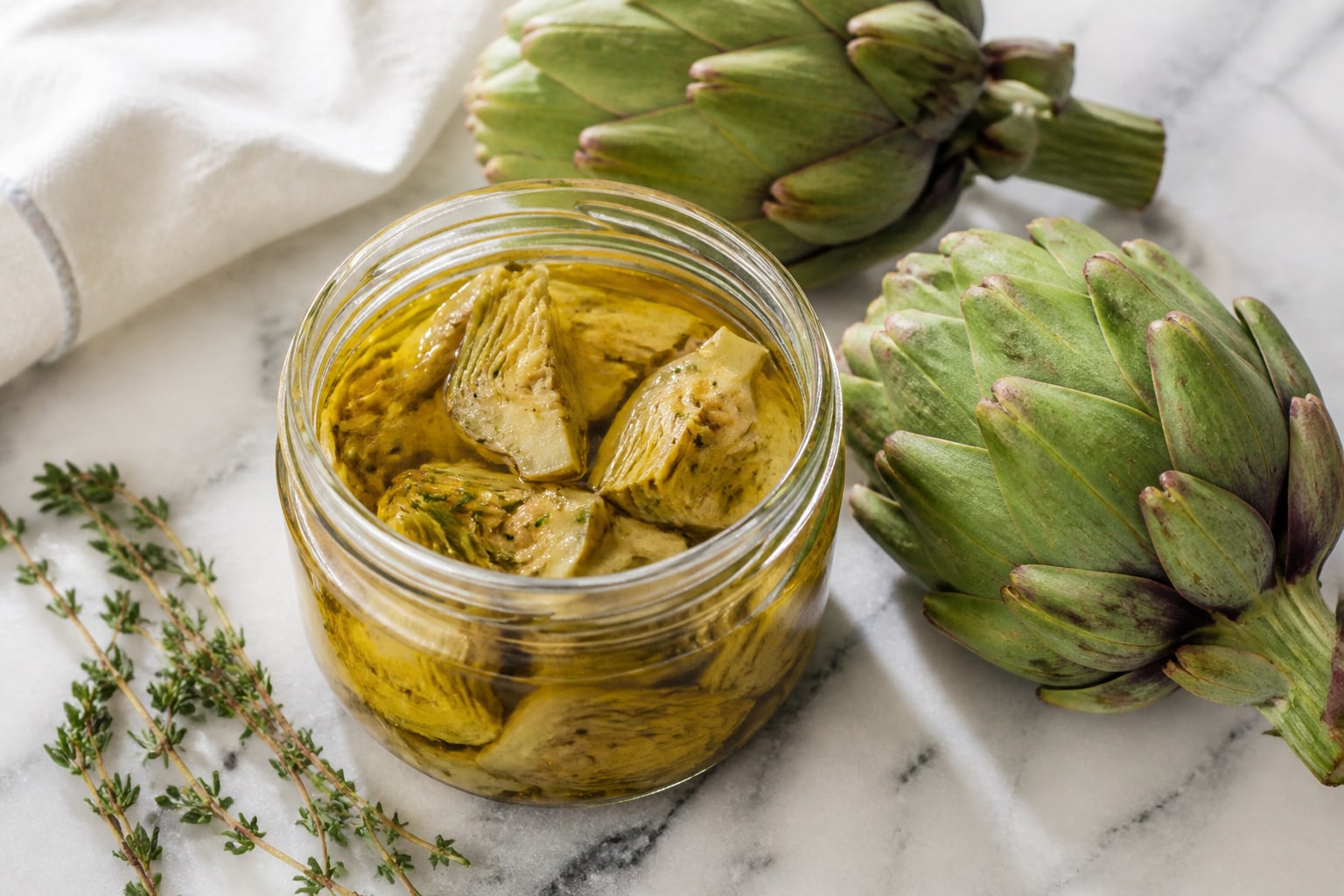
This is the question people ask most, and the answer has nuances. Once confited, let them cool off the heat, transfer them with their oil to a clean glass jar (previously sterilized with boiling water), and make sure the oil covers them completely.
In the fridge, they last 2-3 weeks without problem, as long as the oil covers them entirely. If any artichoke sticks out above the oil, it oxidizes and shortens the life of the whole jar. Outside the fridge, at room temperature, it’s not recommended to exceed 48 hours: oil does not sterilize by itself, and without a cold chain the risk of bacterial growth increases.
Pairing and how to serve confit artichokes
As a tapa, they go well with a white wine with some acidity to cut through the oil’s richness: a Verdejo from Rueda or a young Albariño. If you serve them warm, with a little thinly sliced Iberian ham on top and flakes of salt, you have a bar-style tapa without any fuss. They also go well on toasted bread with a poached egg, or chopped into a tortilla.
If you enjoy experimenting with slow-cooking techniques for fish, the same principle of calculating time and temperature precisely is explained in sea bass baked in salt: how to calculate the salt and time per kilo.
FAQ
Can confit artichokes be frozen? Yes, but they lose some texture when thawed. Freeze them in their own oil, in an airtight container, for up to 2 months. Thaw in the fridge, never at room temperature.
How long does an artichoke confited in oil last? In the fridge, well covered in oil and in a closed jar, between 2 and 3 weeks. Outside the fridge, a maximum of 48 hours.
Is this recipe suitable for people with gluten intolerance? Yes, all the ingredients are naturally gluten-free. Only check the bread if you serve them on toast.
Can I reuse the confit oil? Yes, once strained, it works for sautéing vegetables or dressing salads. It will have a mild artichoke and garlic flavor that works well in other dishes.
As an Amazon Associate, I earn from qualifying purchases.




0 comentarios · Comentar