Homemade fried milk: the old-fashioned dessert with a golden crust
The traditional homemade fried milk recipe step by step, with exact quantities so the crust turns out crispy and the inside stays creamy. Tips, variations and the most common questions answered.
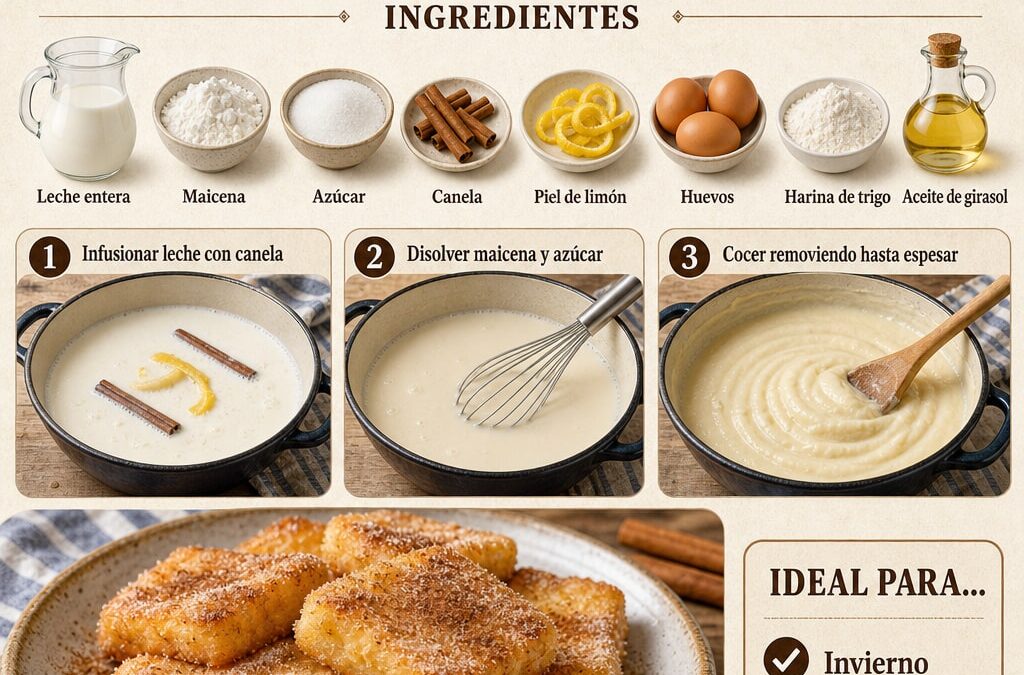
My grandmother made fried milk on winter Sundays, whenever there was leftover milk from making custard and nothing could go to waste. That’s how this dessert came to be in so many Spanish kitchens: out of the need not to throw anything away. It’s just as tempting today, especially when temperatures drop and you crave something you can eat with a spoon that also has a crunchy outside.
It’s a timeless dessert, one of those found on the menu of any Castilian mesón and in the recipe book of any home in Castilla y León or Cantabria. It suits anyone looking for a simple homemade sweet that needs neither an oven nor a precision thermometer. If you like Castilian garlic soup, this fried milk is its sweet counterpart: the same resourceful home-cooking spirit, with a completely different result.
What fried milk is and where it comes from
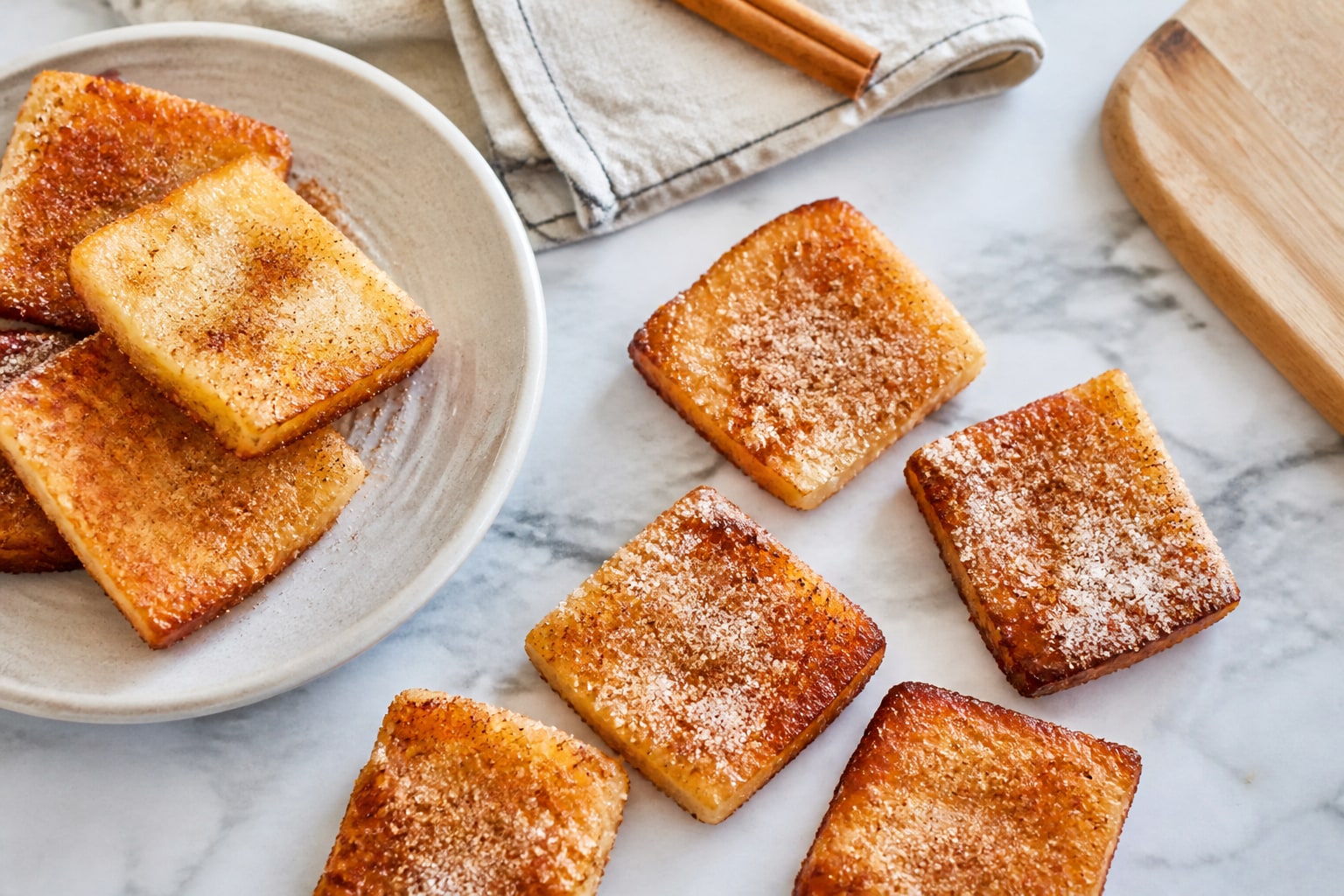
Fried milk is a thick pastry cream, cut into squares, coated in egg and flour (or breadcrumbs) and fried until it forms a golden crust. Inside it stays creamy, almost like a firm custard; outside, it’s crispy.
Several northern regions claim it: Cantabria, Castilla y León and the Basque Country have very similar versions, all with the same origin in convent and home baking that made use of the milk and eggs from the pantry. No protected designation of origin or guild claims it exclusively — it is shared heritage, like rice pudding or natillas.
Quick recipe overview
Before getting into the work, here is the essential information at a glance.
| Detail | Value |
|---|---|
| Servings | 6 people |
| Preparation time | 20 minutes |
| Resting time in the fridge | at least 3 hours (better overnight) |
| Frying time | 2-3 minutes per batch |
| Difficulty | easy, requires patience during the resting |
| Allergens | gluten, dairy, egg |
Ingredients for 6 people
- 1 litre of whole milk
- 100 g of cornflour (fine corn flour)
- 150 g of sugar, plus 50 g for coating at the end (optional)
- 1 cinnamon stick
- the peel of 1 lemon (only the yellow part, without the white)
- 2 large eggs for coating
- 100 g of wheat flour for coating
- sunflower oil for frying, about 500 ml
- ground cinnamon to sprinkle when serving
Step-by-step preparation
- Infuse the milk. Heat 800 ml of milk with the cinnamon stick and the lemon peel over medium heat for about 8 minutes, without letting it boil hard. Remove from the heat and let it rest for 10 minutes so it picks up the aroma. Strain and set aside.
- Prepare the cornflour mixture. In a bowl, dissolve the 100 g of cornflour and the 150 g of sugar in the 200 ml of cold milk you kept aside from the infusion. Stir well until there are no lumps.
- Combine and cook. Pour the hot infused milk over the cornflour mixture, little by little and stirring constantly. Return everything to medium-low heat and cook, stirring non-stop, for about 6-8 minutes. It’s ready when the cream thickens and, when you drag a spoon through it, it leaves a mark on the bottom of the pan, like a very thick béchamel.
- Pour and cool. Spread the cream into a rectangular dish or mould greased with a little oil, leaving a layer about 2 cm thick. Smooth the surface with a wet spatula. Let it cool at room temperature for 30 minutes, then put it in the fridge for at least 3 hours, preferably overnight. This resting step is the one people skip, and that’s why it falls apart when frying.
- Cut into squares. Turn out onto a board and cut into squares or rectangles of about 5×5 cm with a knife dipped in cold water.
- Coat. Pass each piece first through flour, shaking off the excess, then through beaten egg. Do this just before frying, not earlier, because if they sit coated they release water and become soggy.
- Fry in small batches. Heat the oil to 180°C (if you don’t have a thermometer, drop in a small piece of bread: it should brown in 20 seconds). Fry 3-4 pieces at a time, 1 minute per side, until the crust is golden and even. Don’t overcrowd the pan or the temperature drops and they soak up oil.
- Drain and sprinkle. Transfer to kitchen paper for 1 minute. Serve warm, dusted with a mixture of sugar and ground cinnamon, or simply as they are.
Tips and variations
- Cornflour is the key to the texture. If you use regular wheat flour instead of cornflour, the cream turns out pastier and less glossy. Don’t substitute it unless necessary.
- Gluten-free version: swap the wheat flour for rice flour in the coating, and check that the breadcrumbs, if you use them, are certified gluten-free. The cornflour in the cream is already suitable.
- To keep it from breaking when frying, resting in the fridge is non-negotiable: the longer it rests, the firmer the block becomes. If you’re in a hurry, freeze the already-cut squares for 20 minutes before coating.
- Version with breadcrumbs instead of flour for the coating: it gives a thicker, rustic crust, typical of some households in Cantabria. It’s a matter of taste.
- In a Thermomix, do steps 1 to 3 together: milk, cornflour, sugar, cinnamon and lemon peel, all together for 10 minutes, 90°C, speed 4. Strain before pouring into the mould if you want to remove the cinnamon and lemon peel.
Pairing and how to serve fried milk
It’s a dessert to eat with a spoon or fork; it’s served warm or at room temperature, never straight from the fridge, because the crust loses its appeal. To drink, a light sweet wine such as Moscatel works well, or simply a black coffee to cut the sweetness. It needs no accompaniment, although a small scoop of vanilla ice cream on the side fits in well if you want to turn it into something more like a restaurant dessert.
Frequently asked questions
Can I make fried milk the day before? Yes, in fact it’s a good idea. Prepare the cream and leave it in the fridge overnight. Coat and fry just before serving, never in advance, because it loses its crispness.
How long does it keep in the fridge once fried? One day, covered. The next day it’s no longer as crisp, although the flavour is still good. If you want to recover some texture, warm it for 2 minutes in the oven at 180°C before serving.
Can it be frozen? The cream before frying, yes, up to 2 months in the mould, well wrapped. Once fried it doesn’t freeze well: the crust gets soggy when it thaws.
Why does it fall apart when frying? Almost always for two reasons: too little resting time in the fridge, or oil that isn’t hot enough. If the oil isn’t at 180°C, the coating takes time to seal and the cream escapes before the crust sets.


0 comentarios · Comentar