Crispy calamari rings: batter that doesn't go soggy
The key to keeping calamari rings from going soggy lies in drying the squid well, choosing the right flour and controlling the oil temperature. I'll walk you through it step by step so they stay genuinely crispy, not just crispy right out of the pan.

Rabas are that tapa you order without thinking when you see they’ve just been made. The problem is that they almost always arrive crispy and, two minutes later, turn into a limp, greasy mess that soaks up oil. That isn’t your fault for eating slowly. It’s a fault in the batter.
At home it happens the same way. You fry the squid, the first bites are perfect, and before you sit down at the table they’ve already gone soft. There’s a technical explanation for this and, above all, a solution. Here I’ll tell you why it happens and how to make crispy calamari rings that hold up, with real quantities and specific times, no “fry until golden” without further context.
Why the batter on calamari rings goes soft
The batter goes soft for three reasons, almost always combined: excess moisture in the squid before battering, unsuitable flour, and oil temperature that is too low or inconsistent.
Squid releases water. A lot of it. If you batter it while damp, that water migrates outward during frying, mixes with the oil soaking into the crust and leaves it gummy as soon as it cools a little. It’s trapped steam, not magic.
The flour that makes the difference
Not all flour works the same. Regular wheat flour (all-purpose) absorbs oil easily and forms a denser crust that tends to soften quickly. Mixing wheat flour with a little rice flour or chickpea flour changes the result: they give a drier, more porous texture that keeps the crunch for longer.
In southern Spain, where fried rabas and calamari are almost an institution, they work a lot with blends of wheat flour and chickpea flour, in proportions similar to the one I suggest in the recipe. It’s no coincidence: chickpea flour has less gluten, forms a lighter crust and absorbs less fat.
Oil temperature, the factor nobody controls
This is the most common mistake and the easiest to fix: frying with oil below 175 °C. If the oil is cold, the batter takes longer to seal, absorbs more fat and turns limp. If it’s too hot (above 190 °C), it burns outside and stays raw inside.
The correct range for frying calamari is between 180 °C and 185 °C. Without a kitchen thermometer, a home trick: drop in a breadcrumb; if it bubbles up within 15-20 seconds and browns in a minute, the oil is at the right point.
Here is a summary table of the factors that influence it most and how to correct them:
| Factor | Common mistake | Correction |
|---|---|---|
| Squid moisture | Not drying it before flouring | Dry with kitchen paper for 2-3 minutes |
| Type of flour | Only wheat flour | Mix of wheat flour and chickpea flour (70/30) |
| Oil temperature | Less than 170 °C | Keep between 180-185 °C |
| Amount per batch | Frying too much squid at once | Fry in small batches, without crowding |
| Resting after frying | Leaving them on a plate without a rack | Drain on a rack, not on paper |
Ingredients
For 4 people as tapas, or 2 as a main dish:
- 600 g fresh or frozen squid (already thawed), cleaned and cut into 1 cm rings
- 150 g wheat flour
- 70 g chickpea flour
- 500 ml mild olive oil or sunflower oil for frying (approximate amount, depends on the vessel)
- 1 teaspoon fine salt (5 g), plus a pinch to adjust at the end
- 1 lemon, for serving
- Kitchen paper towels
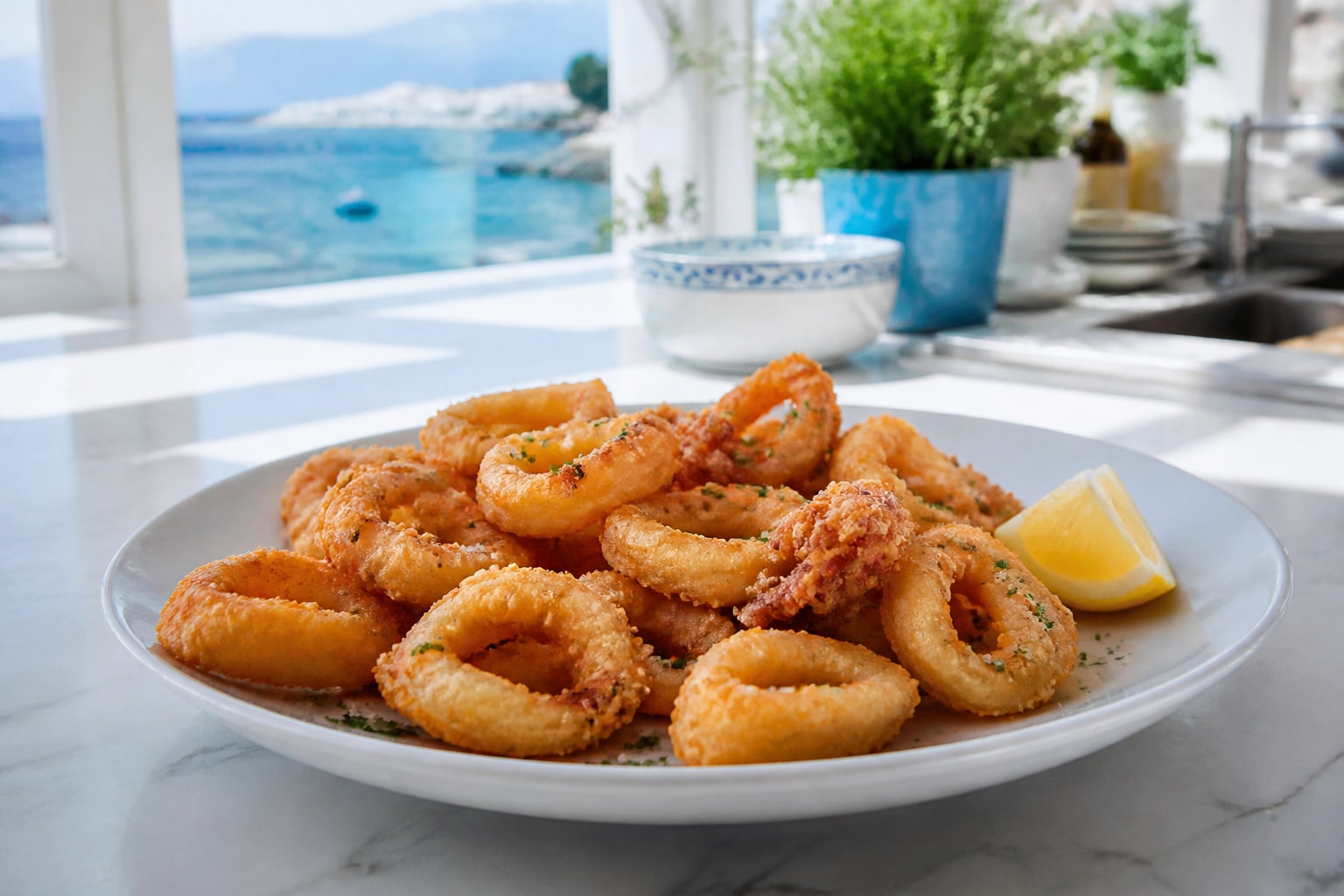
Step-by-step preparation
Prepare and dry the squid
- Clean the squid if you didn’t buy it already cleaned: remove the quill, the innards and the outer skin. Cut into rings 1 cm thick.
- Spread the rings out on kitchen paper and let them dry for 10 minutes at room temperature. Change the paper once halfway through. What you’re looking for: the squid shouldn’t leave a moisture mark on the paper.
- Lightly season with salt and pepper, spreading the teaspoon of salt over all the rings.
The batter
- In a large bowl, mix the wheat flour and chickpea flour. Stir well so the mixture is uniform.
- Pass the squid rings through the flour mixture one by one, pressing lightly so they adhere well. Shake off the excess: loose flour burns in the oil and makes the rest of the frying taste bitter.
Frying in two batches
- Heat the oil in a deep pan or fryer to 180-185 °C. Use enough oil so the squid is semi-submerged or fully covered, not resting on the bottom.
- Fry in batches of 150-200 g of squid at a time, never more. If you add everything at once, the oil temperature drops and the squid goes soft before browning.
- Fry for 90 seconds to 2 minutes per batch, until the crust is golden, not dark brown. Squid cooks very quickly; overdoing it makes it tough as rubber.
- Remove with a slotted spoon and drain on a rack, never directly on kitchen paper. Paper traps steam beneath the piece and softens it by contact.
- Serve immediately, with a squeeze of freshly squeezed lemon on top.
Tips and variations
- Double flour pass: for an even thicker, crunchier crust, pass the squid through flour, then through a little cold sparkling water, and then through flour again before frying. The carbonation adds extra air to the crust.
- Gluten-free version: replace the wheat flour with fine corn flour (like precooked cornmeal flour), keeping the same proportion with the chickpea flour. The result is a little more rustic but just as crispy.
- Air fryer: it doesn’t give the same result. Dry batter needs direct contact with hot oil to seal properly; in an air fryer it comes out drier and less crispy, although it’s a valid alternative if you want less fat.
- Common mistake: battering all the squid at once and letting it rest before frying. The flour absorbs the moisture from the squid and turns to paste. Batter just before frying, batch by batch.
Pairing and serving
Crispy calamari rings call for something fresh and acidic to cut through the richness of the frying. A young white wine like Verdejo from Rueda or an Albariño works well. If you prefer beer, a well-chilled lager does the job nicely.
As a side, little else is needed: a wedge of lemon and, if you like, a light homemade mayonnaise for dipping. If you want something with more body to accompany them, a mixed fried platter with small fish or some croquettes on the side never fails; in fact, if you’re interested in mastering another batter that doesn’t open up, the one for creamy cod croquettes follows a similar logic with oil temperature.
FAQ
Can calamari rings be made with frozen squid? Yes, but thaw it in the fridge the night before and dry it very well before battering. Frozen squid releases more water than fresh, so the drying step with kitchen paper is even more important here.
How long do fried calamari rings stay crispy? Between 10 and 15 minutes if you leave them on a rack. After that, residual steam starts to soften the crust. That’s why they’re served fresh, not kept for later.
Can they be reheated the next day? They don’t recover their original crunch in the microwave. Better in an oven at 200 °C for 5-6 minutes, or in a pan with no added oil over medium-high heat, turning them halfway through.
Which oil is better, olive or sunflower? Both work. Mild olive oil adds a bit more flavour and holds temperature well, but it’s more expensive for frying in quantity. Sunflower oil is more neutral and economical. What matters most isn’t which one you choose, but keeping the temperature steady between 180-185 °C throughout the frying.
As an Amazon Associate, I earn from qualifying purchases.




0 comentarios · Comentar